Alex Lytwyn
Alex Lytwyn
“The Best Academic Decision of My Life”: Alex Lytwyn (’09) on Being Inspired to Study History, Rising to Dr. Carrigan’s Challenge, and Bearing Witness for His Family
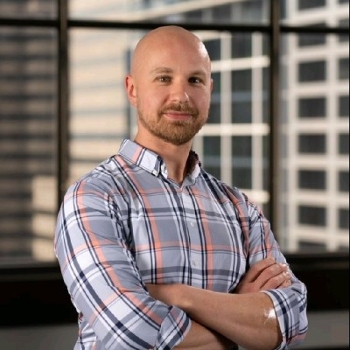
This week’s Project 100+ memory comes Alex Lytwyn (’09). He was born in Trenton and grew up in Hamilton, New Jersey. His father was a lab technician for a flooring company. His mother worked as a waitress and homemaker for Alex, his older sister, Adrianna, and a younger brother, Walter Lytwyn, another Rowan alum who studied marketing and earned his degree in 2013. He attended public schools and graduated from Steinert High School in 2005. For two years, he studied at Mercer County Community College and then transferred to Rowan University in the Spring of 2008. Two years later, he earned his bachelor’s degree in history with a concentration in international studies. Dr. James Heinzen told him that he had to study abroad if he wanted to pursue graduate studies in Russian history. So, even though he was finished with his degree requirements, he enrolled in a study abroad program that took him to Moscow in the Summer of 2010. There, he studied the Russian language and Russian history. In the Fall of 2011, he began the graduate program at Temple University, earning with his master’s degree in 2014. His thesis was entitled “‘The Love of America is on Move’: Victimization, Cold War Consensus, and the Hungarian Revolution, 1956-1957.” Although he continued looking for more history-related positions, he settled into a job with the Judge Group, a technology consulting firm. He has been there for nine years, and his current title is Recruiting Lead.
*****
Neither of my parents had a bachelor’s degree, but I think that they always expected that the three of us would go on to college. They did not give us any kind of ultimatum, and we were free to choose our own path, but we needed no convincing. By the time that I had graduated high school, my sister was doing well in college. I will say that my parents did say that we should attend state colleges. I am sure this was for financial reasons. In fact, they wanted us to go to community college for the first two years to save money. Again, I don’t think any of us questioned their logic or reasoning. As I look back, I think their decision makes even more sense now.
I had been greatly inspired by a high school history teacher, Doug Martin. I took him for just one class, The United States since 1945, but it was very impactful. He was a veteran of the Vietnam War and was so passionate about history that it was infectious. Further, he helped us see how understanding history aided in comprehending the contemporary world. I fell in love with history because of him, and I knew that I wanted to continue to study the subject in college.
I decided to transfer to Rowan because I liked the size of the school. It was neither too big nor too small. I felt that I would be known there. I also had several friends who attended Rowan and already had many fun weekends in Glassboro even before I transferred.
My first history class at Rowan was with John Constantino for Western Civilization. He was full of energy, constantly cursing and running around the room. He was definitely different and not for everyone, but he kept my attention.
That same semester I had Historical Methods with you, which was a completely different experience. I can still remember your opening day speech. It was a challenge. You told us that the class was more important than our other classes and that it was going to take our maximum effort. You said that you expected some of us would not make it and that the average grade would be a B- or even a C. I can remember feeling simultaneously deeply scared and excited about the bar that you were setting for us. I can remember looking at the syllabus that first week and being blown away by how much reading we were going to have to do. It was clear that you were trying to light a fire under us, and you succeeded with me. I could see that you were serious, that you would be there to help us if we were willing to work hard. So, I threw myself into the work, and I still feel enormously proud that I earned an A in that class. One of the particular things that I remember is that you had Christopher Waldrep, the author of one of the books you assigned, visit our class as part of his day on campus. I still have his book, Vicksburg’s Long Shadow, all these years later.
I ended up taking as many classes with you as you I could, and I wonder if I set the record. At the time, you had the reputation among the students of being the most academically demanding, and I wanted to be pushed. I ended up taking five classes with you. In addition to Methods, I took History of New Jersey, Civil War and Reconstruction, US Labor History, and Field Service in History. For your US Labor History course, I wrote a paper on the Roebling Wire Workers Strike of the early 20th Century, which you recommended that I present at the Regional Conference of Phi Alpha Theta being held at Delaware State University. I can remember having a bit of an imposter syndrome in the lead up to the presentation, but I can remember the great feeling of confidence that I gained from the experience. It meant so much for other faculty members outside of Rowan to take my work seriously, to ask me about my sources and my methods, and to praise my research. The following year I presented again, this time at Bloomsburg University on my Seminar paper on Ukrainian partisans who collaborated with Nazis against the Soviet Union during World War II. This experience was so much smoother. Not only had I presented before, but I was an even better student by that point. I had done so much research on the topic and felt so comfortable answering questions. I can remember feeling that I had impressed some of the other faculty members, which made me feel very good.
I had not really ever thought anything about public history until I took your Field Service class. I ended up interning at the William Trent House in Trenton, and it was an eye-opening experience and a window into a world that I had never even really imagined. I enjoyed giving tours, even though visitors sometimes asked questions for which I had no answers. After this class, I began to think about working for a non-profit or a museum. I ultimately decided against this path, but I was glad to have had the experience.
Lee Kress was in some ways a stereotypical history professor. He was strait-laced but also very passionate about his subject. I took him for History of Latin America. I appreciated his dry sense of humor. Like you, he challenged me academically, which I appreciated.
I was very excited when Dr. Heinzen came back from sabbatical and began to offer Russian history courses. I squeezed in as many of his classes as I could. I took him for Russia to 1914, Stalinism, and for Seminar, which naturally also focused on Russian history. That course is one of my all-time favorite academic experiences. My family is Ukrainian, and that history was part of our past. It was painful in many respects, but I felt great pride in learning what had happened, almost as a witness for all that had been done to my family and to so many others. I really enjoyed his assignments and the texts that he assigned. From this point forward, I knew that Russian history was what I wanted to study in as much depth as I could.
I have zero regrets about studying history or going to Rowan. I look back on my time there with a real sense of fondness. My history degree has shaped how I see the world, and it has given me a more analytical mind that has helped me both personally and professionally. In fact, my decision to study history was the best academic decision of my life, made even richer by all the wonderful people that I met along the way. I am constantly touting the benefits of my history degree with my colleagues, and they certainly recognize that it helped make me the office’s trivia champion on numerous occasions.
*****
This is part of the Department of History’s “Project 100+,” an ongoing collection of memories by Glassboro State College and Rowan University alumni and staff that began as part of the celebration of the 100th anniversary of the founding of Glassboro Normal School, later Glassboro State College, and now Rowan University. Thanks to Laurie Lahey for helping proofread and edit the final versions. Email carrigan@rowan.edu with questions or corrections. You can find the Link to all of the Project 100 and Project 100+ entries on the Web: https://www.rowan.edu/ric-edelman-college/departments/history/alumni/