Hettie Williams
Hettie Williams
“A Real Turning Point”: Hettie Williams (‘94) on Switching to the History Major at Glassboro State and the Road to Becoming a Professor
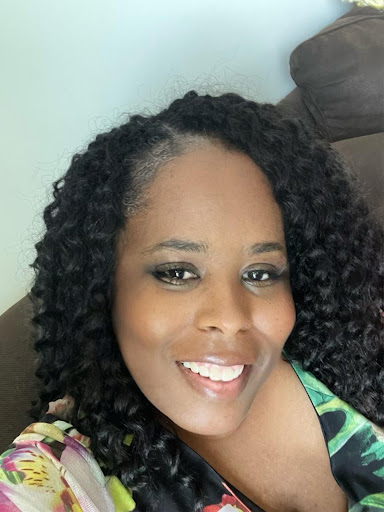
This week’s Project 100+ memory comes from Hettie Williams. Boorn in 1971 in New Brunswick, New Jersey, her parents raised her in several communities in central and southern New Jersey. She attended public schools and graduated from Matawan Regional High School in 1989. Neither of her parents had a college degree, but they were both quite accomplished. Her mother, Gloria A. Hill Williams, was a licensed practical nurse who had been born in 1943 in Oakfield, Georgia. Her father, Freddie G. Williams, Sr., was also originally from the South and had been born in in 1940 in Gordon, Alabama. He attended school very infrequently as he was needed to help in the fields starting at age five. He began to attend school regularly at age eleven, only after his family moved to the North during the Great Migration. He used to tell the family that they settled in New Jersey because that it was where their car broke down. Despite his lack for formal schooling, his high intelligence, an IQ of 140 he was told by school officials, allowed him to catch up and he graduated high school. He then went into the US Army and became one of the very first African American Green Berets. He met Hettie’s mother while he was stationed in Petersburg, Virginia. They moved to New Jersey, and he got a job as a chemical assistant at GlaxoSmithKlein (GSK) Pharmaceuticals in New Brunswick, New Jersey. Hettie is the youngest of six children. The very next day after graduating from high school, she started Rowan’s summer program. She graduated in the Spring of 1994 and took a position with AmeriCorps that Fall. She was in the Urban Schools Service Corps that was located in Red Bank, New Jersey. She was support staff in a middle school doing tutoring, after school programs, and in-class support. Hettie was in charge of the tutoring program. After a year, she became a teaching assistant in the Matawan Avenue Middle School. All during this time, she had really wanted to become a college professor. She applied to several programs and decided to enroll in the history master’s program at Monmouth. Two years later, she finished this program and took several positions teaching history as an adjunct faculty. In 2004, she became an Instructor at Monmouth and then a Lecturer in 2007. In 2011, she began the doctoral program at Drew University, finishing six years later in 2017. The following year, she transitioned to a tenure-track line as an Assistant Professor with advanced standing. She got tenure in 2021 and was promoted to Associate Professor. That same year, she became president of the African American Intellectual History Society (AAIHS), serving until 2023. This is one of the largest associations in the country devoted to the study of the Black experience with more than 1,000 members worldwide and produces the award-winning blog Black Perspectives. In 2024, Rutgers University Press published a revised version of her doctoral thesis as Georgia of the North: Black Women in the Civil Rights Movement in New Jersey.
*****
I always loved a good story. My parents loved history and had been involved in some of the great events of modern American history. My mother had marched with Martin Luther King, Jr. in Albany, Georgia. My father had been in Vietnam during the Tet Offensive. He used to tell us that he slept through the first part of the Tet Offensive because he was such a deep sleeper. My dad was deeply conflicted about his time in the Army. On the one hand, he was proud of his service and being a Green Beret and had always believed in the mission of protecting democracy in south Vietnam. He even made all of his children learn the patriotic song, “The Battle of the Green Berets.” On the other hand, he became very antiwar after leaving the service and suffered from Agent Orange. I have a very strong memory of the fall of Saigon and the end of the Vietnam War. My father was clearly feeling emotional as the last troops were withdrawn. He came up to my sister and I and presented us with his dog tags and said, “it is all over.” I wasn’t sure at the time why he was doing this, but it stands out in my memory. Today, I certainly understand that it was his own way of trying to move on from a conflict that had been emotionally and physically very had hard on him. In any event, perhaps due to all these family stories, I always liked history and did well in my history classes.
None of my siblings finished college. My brother had gone to Kean University on a football scholarship, but he left after an injury with an associate’s degree. Some of my other siblings also started college but never finished. However, my parents always talked about me a little differently. I was seen as more intellectual, more of a nerd so to speak than my siblings, and they always told me that I was destined for college. Unfortunately, with six children, it was not that easy for my parents to pay for college. So, I always knew that I was going to have to work and pay for much of my education.
I applied to a couple of schools, and my parents thought I should go to Brookdale Community College because it was cheap and close. However, I wanted to go away from home. My guidance counselor at Matawan Regional High School was Pat Cunnigham, and she was a great advocate for Black students. She made sure that I came to this college fair. I was turned off by the person who came from Rutgers, and I never applied there. It was my first time hearing about Glassboro State College, but I like the person I met at the fair. After conferring with my guidance counselor and talking to some other folks, I decided that Glassboro State College was my top choice.
When I applied to Rowan, they required an in-person interview at least for those seeking support through the Equal Opportunity Fund (EOF) and Minority Achievement Program (MAP). My father came down with me, and I can still remember my interview. I can’t remember the name of the person who interviewed me, but I remember that she had read my application essay on Martin Luther King, Jr. I passed and began the summer program that June. When I was a student, Bill Myers oversaw the MAP/EOF program, and he was a fantastic person. He helped so many people adjust and survive the challenges of the transition to college, especially for first-generation and minority students.
Even though I loved history, I applied to study English at GSC. This was largely because I thought that I wanted to be a writer, and Glassboro State College had the reputation for a great writing program. So, I was an English major when I started. During my first year, I took general education courses in several subjects, including history, but I didn’t decide to switch majors at first.
After my first year, my finances were such that I could not afford to return for my sophomore year. I had received a partial MAP scholarship, but tuition was $4,500 a year at the time, which was high for the 1990s I think. Moreover, the cost of staying in the residential hall and the meal plan was hard for us to afford. On top of this, we didn’t understand the loan process for college, and so we just completely declined to pursue any loans during this first year. So, the result was that I had a balance on my account at the end of my first year. Rowan would not allow me to enroll in courses until I paid this off. So, I left and moved back in with my parents. I worked multiple jobs to save money, and I can remember sending in small amounts of money to Glassboro State. Sometimes, I sent in $10, other times $50, and I just kept doing this all year until the balance was paid. When I returned to campus, the Bursar’s Office remembered me from all these small payments. Also, when I came back, I had done a better job with financial aid and had college work study funds. I worked for both the Art Department and the School of Education.
So, it was during my second year at Glassboro State College that I switched my major to history. Part of this was my interaction with the English Department which let me know that they were surprised that I came back after just the one year off. However, the main reason that I changed was Western Civilization since 1660 that I took with David Applebaum. You could tell that Dr. Applebaum really cared about us as students. He knew our names very quickly. I also loved listening to his stories. He took a personal interest in me and encouraged me to become a history major. I later took two upper-level courses on European history with him. He emphasized critical thinking in class, and it was clear that he really respected us as students and thought that we were capable of deep level analysis. For me, his classes were a real turning point. Even though I didn’t fully commit to becoming a college professor for many years, I believe that he set me on that path.
Because of continuing financial issues, I got dropped from my registered classes. After I got my finances cleared again, most history classes were full. One that was not full was Russian history with Robert Hewsen. He had a reputation as being very hard, which was why there were spaces available. I liked all types of history, and I was up for the challenge. He was indeed a taskmaster and other students were clearly suffering. However, I loved it and proudly earned an A in his class. Like Dr. Applebaum, he really pushed us to think deeply and critically about the past.
I had Cory Blake for Arab-Israeli Conflict. I loved how she set up that course, which was around debates. I can still remember how she structured these discussions and how she kept things flowing and had us all engaged. I had always loved United States history, but these history professors showed me how much I loved world history as well.
I can also remember really enjoying a two-semester sequence that I took in the Communication Studies Department. They were called Communication through Literature I and II. I can’t remember the professor’s name right now, but it was a wonderful introduction to interdisciplinary thinking.
Gary Hunter was a great mentor to many students. He advised many of us even if we never had him for a class. He would always stop and talk to me when he saw on campus and ask how I was doing. I think that he probably took a particular interest in those of us who were African American, but it was clear that he cared about students of all backgrounds and was a powerful mentor to many students. He became chair I believe while I was a student, so he was teaching fewer classes. I can remember the feeling that I had when I graduated because Dr. Hunter handed me my degree and shook my hand. It meant a lot to me because I knew how much he had cared about me as a student. Even after I graduated, we remained in touch. In fact, while I was working on my master’s thesis at Monmouth, I would call him for advice. He shared with me his research on southern New Jersey, which was published after his death.
I had one or two courses with Edward Wang. One of them was Modern China. He was a new faculty and had a lot of energy. His classes were packed, and there was so much energy in the classroom. I loved my world or global history courses at Rowan, and I thought I was going to specialize in that area for a time.
My interest in global history also led me to take Lee Kress for History of Mexico. I can still remember the research paper that I wrote for the course on the New JEWEL movement in Grenada. They were a revolutionary socialist group led by Maurice Bishop. I can remember that I argued that Bishop was more of a Black nationalist than a communist rebel as the Reagan administration had contended. Dr. Kress was the advisor of Phi Alpha Theta and encouraged me to apply. I did so, and I can remember vaguely participating in some service activities with them. I did not join them when they went to their local conference because I was just too busy with my various jobs.
I had a memorable class with Steve Gimber. He was an adjunct faculty member and very young, still in graduate school somewhere I believe. He was down-to-earth but also very challenging. He taught Civil War and Reconstruction, and I can remember him bringing in replica bullets and even hard tack that I think he made himself. I remember that he asked to use my exam as a model when other students were complaining about his grading. This made me feel good about my performance. He was a Civil War reenactor, and he told us that he was going to come in his full uniform to class. I can remember telling Dr. Hunter that he was going to do this, and he made me laugh very hard because he said, “he better not come as a Confederate soldier.” Of course, he did not. He came as a Union soldier. I still remember a lot from this class and kept the books he assigned.
In my senior year, I took Dr. Hewsen again, this time for Seminar. The focus of his Seminar was family history. I did some oral histories for this project on my family, and I really enjoyed this research. I went all the way back to the early 19th century with some parts of my family. My family oral tradition had my ancestors coming from Africa after the slave trade had become illegal. I was lucky that I had so many long-lived family members. My great-grandfather lived to be 103 years old. My grandmother is actually still alive today at 104! Dr. Hewsen quite liked my final paper, which made me very happy because he was so challenging.
The support staff at Rowan, especially those in the EOF/MAP program was very important to me. As I have mentioned, Bill Myers was critical to so many of us. He fostered a wonderful sense of community, and he helped me build bonds with students that I am still friends with to this day. I don’t remember their names now, but there were many peer mentors, upper class students who I think had once been in our place. They really helped all of us with the transition to college life.
As I look back all these years later, and now as a professor myself, I think that Glassboro State College in the 1990s was a special place. I didn’t appreciate it at the time as much as I do now. There is not the same sense of community among the students here at Monmouth as there was at Glassboro. Yet, students today still need that support. They need it from each other and from faculty. In hindsight, I was so fortunate to be in place with such a strong mentorship program led by someone like Bill Myers. I was also very fortunate to have discovered the Department of History and to have switched majors. So many faculty in that Department pushed me to become a better student and supported me over the years, even after I graduated. I think about them often now that I am a professor of history myself.
*****
This is part of the Department of History’s “Project 100+,” an ongoing collection of memories by Glassboro State College and Rowan University alumni and staff that began as part of the celebration of the 100th anniversary of the founding of Glassboro Normal School, later Glassboro State College, and now Rowan University. Thanks to Laurie Lahey for helping proofread and edit the final versions. Email carrigan@rowan.edu with questions or corrections. You can find the Link to all of the Project 100 and Project 100+ entries on the Web: https://www.rowan.edu/ric-edelman-college/departments/history/alumni/