Ina Peck Livingston
Ina Peck Livingston
“He Loved Working with Students”: Ina P. Livingston on Her Husband, Operation Uganda, and More
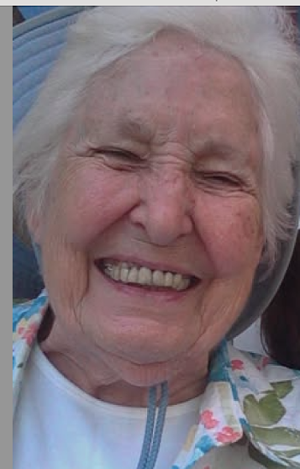
Today’s Project 100+ entry is from Ina Peck Livingston. She is the widow of Marius Livingston, a professor of history at Glassboro State College from 1960 to 1977. Marius was one of the most important faculty members in the first hundred years of the University. He served as chair of the Department and was a beloved classroom instructor, but his greatest accomplishments took place outside of the classroom where he organized some of the most ambitious and successful projects ever attempted by the College. In this entry, we learn about Marius from the perspective of his widow, Ina Peck Livingston, 96, who I interviewed with the help of her granddaughter, Anna Livingston Kelliher. Like the spouses of many other faculty in the early history of GSC, Ina’s vital contributions deserve greater attention. The interview took place remotely. The first interview took place the afternoon of May 26, 2025, for me, and the morning of May 27, 2025, for Ina and Anna. Subsequent interviews and edits took place later in 2025 with final edits in early 2026.
*****
Ina Pearl Peck was born on 9 September 1928 in rural, western Washington County, Maryland, not far from the town of Hancock and the West Virginia border. This part of Maryland is very close to both Pennsylvania and West Virginia, and she had relatives spread between the three states. Her parents were George Peck (1904-1993) and Mary Spade (1908-1996). Both had been born in the Hancock area and came from large, poor, rural families. They met when Mary was working in a hotel in Bedford Springs, Pennsylvania, where three of George’s sisters were also working. They had married five months before Ina’s birth. Ina grew up in houses provided to the workers of The Dillon Orchard Company, for which both her parents worked. Ina and her sisters also worked there as young people. While there was exploitation by the company of its workers, Ina believes that the company allowed her family to get through the Great Depression better than many people around them. Not only did her parents never lose their jobs at the orchard, the family benefitted greatly from the company housing as it provided them not only with shelter but with enough acreage to grow their own vegetables and raise some animals. Yet, there were long-term problems with the orchard as Ina’s father developed health problems after years of daily exposure to insecticides. Both George and Mary were strong supporters of Roosevelt and the New Deal. Although Ina often attended church with her parents and grandparents, she grew up with what she described as a confusing relationship to religious belief and practice. Later, she found her spiritual home in the Religious Society of Friends (the Quakers), becoming a member in 1951.
Ina’s birth was followed by two sisters, Della (1930-2020) and Norma (b. 1932), both in the orchard homes. The three sisters grew up as each other’s primary friends and always remained extremely close. George and Mary had a fourth child much later, George Gregory (or Greg) in 1951. After Ina had left for college, Mary inherited a farm just across the border in Fulton County, Pennsylvania, which she farmed into old age while also providing for George whose health problems minimized his ability to contribute in his later years.
Ina’s educational journey was unprecedented in her family history: she was the first person, on either side, to graduate from high school or to attend college. Her parents were both extremely intelligent and capable but had no more than a fourth-grade education because they had been required to leave school and start working, as was the case of all their family. Ina learned to read before she went to school and was at the head of her class throughout her school years. George, who had named his first daughter from the Zane Grey book he was reading when she was born, seems to have been committed to having his children graduate high school. All her siblings graduated from high school and both Della and Greg went onto obtain college degrees.
For Ina, education was a passion but also a means of escape from the country, orchard life that she hated. She graduated high school at the age of sixteen and, partly funded by nightshifts at a diner owned by a relative, she enrolled at Maryland State Teachers College at Towson, just outside of Baltimore. One of the reasons she chose that school as that her aunt Gladys Peck, with whom she was close, lived in nearby Baltimore. She had initially wanted to study something like anthropology, but her high school and college advisors pushed her towards elementary school. Although she remained critical of women being pushed away from what they wanted to study and into “suitable” subjects, her experience working with first grade children, especially in teaching them to read, became the great passion of her life. She later received a master’s degree in education at Glassboro State College in 1976 (in early childhood education) and travelled to learn new teaching methods (such as open classrooms).
Ina and Marius had three daughters: Leslie (b. 1951), Emily (b. 1953) and Pamela (b. 1956). During Marius’ seventeen years at Glassboro State College, Ina continued to teach First Grade, initially part-time. Not long after the conclusion of Operation Uganda she began her long tenure as Principal-Teacher at Janvier School in Franklinville where she was also involved in the training of student teachers. Ina was a committed supporter of trade unionism and was a member of the New Jersey Teacher’s Union, including serving as their national delegate. She and Marius were remembered by their family as acting as partners in his international projects and in their American political activism and that he supported her teaching career, even when she came up against prejudice against married women with children working.
In the 1970s, after their children had left home, Marius and Ina engaged in extensive travels in the United States and in Europe, especially France. Marius was conducting interviews in Normandy, with Ina’s assistance, towards an academic study involving the D-Day landings, which would never be written due to his early death. Ina also participated in the International Terrorism Conference at Glassboro and helped with editing and indexing the subsequent book for publication after Marius’ death. When Marius’ cancer returned, after a period of remission, Ina took a sabbatical from teaching to be with him in his final months.
After Marius died, Ina continue as Principal/Teacher at Janvier School and received great support in her grief and building a new life from the women friends she had made at Glassboro State College: Gracie Edwards, Eva Aronfeld, Marie Wanek and Wilhelmina Perry, along with a dog name Sybil gifted to her by Sid Kessler who correctly guessed it would offer the comfort she needed. She moved back to Maryland in the 1980s, where she taught first grade until her retirement in 1991. She never remarried. After her retirement, she moved to Colorado with her youngest daughter Pamela, while living up to half the year with her eldest daughter Leslie in New Zealand. She was able to indulge her long-time love of British history and remained involved in progressive politics and the Quakers. Now 97, she lives permanently in New Zealand and has six grandchildren and four great-grandchildren.
*****
I met Marius while an undergraduate student in 1948 at the Maryland State Teachers College (now Towson University). I was studying to become an elementary school teacher and taking a course in British history. Marius approached me while I was sitting at a table. Apparently, he had seen me before and had done some asking around about me at the office. He learned that my IQ was higher than his, which impressed him. During that first meeting, I was a bit annoyed because I was trying to prepare for class. He wanted to know what I was studying. It was a short meeting, but I saw him a few days later. He then asked me to dinner, and I remember thinking that he was a bit bossy. At the time, I was not interested in getting married as my plan was to teach. However, we did end up seeing each other again and soon fell in love. We got married on Christmas Day in 1949 at the Friends Meeting House in Plainfield.
Marius did not have his contract renewed at Towson at the end of the 1948-1949 academic year. After we got married, we both took positions teaching in the public schools of Pennsbury in New Jersey. I taught 1st grade at Pennsbury Elementary School, and Marius taught at Pennsbury High School.
After many years of teaching at Pennsbury, Marius applied for a position at Glassboro State College. I was happy to go with him because I was quite besotted with him and wanted to support him.
I remember several faculty from our nearly two decades in southern New Jersey. For example, I recall the faculty member who hired Marius, Harold Wilson, and his wife Bea. We were friendly, and they came over to our house for dinner on several occasions. Bob and Gracie Edwards were very good friends for a very long time. Gracie was one of my best friends. She was fun, laughed often, and we frequently went on outings together. I can remember going into Philadelphia with her on many occasions. On one of these trips, we saw that a Polish wedding was taking place. We were both intrigued and joined in without anyone knowing any different. Gracie and I stayed in contact for a long time, for many years after both of our husbands passed. She just died just a few years ago. Another couple that were good friends were the Creamers. Marvin even stayed with us from time to time. Lee Kress was a young colleague of Marius, and they were very close. Lee also helped with the international terrorism conference and with the editing of the volume after Marius passed away. I can remember that he and Marius worked very well together and seemed to be in tune on things.
Marius and I were very active in the civil rights movement. We marched in several demonstrations and were very supportive during the 1960s. I can’t remember all the specifics at this date. However, most of our work was done in conjunction with the Quakers. We found the Quakers together. I can remember wandering around one Sunday and decided to walk into a Quaker meeting. I ended up becoming very impressed with the way that Quakers organized their worship and their beliefs. I was quite impressed with silent worship, and the fact that they didn’t force you to subscribe to particular spiritual beliefs. These aspects, combined with their strong belief on social justice, fit me and Marius very well. We were attenders at Woodstown Monthly Meeting for many years. I am now a member of the Christchurch Friends Meeting in New Zealand.
Marius believed that no one was paying attention to what was happening in Africa with decolonization, but he believed that the independence movements there were of vital importance in world affairs. He wanted to bring attention to Africa, and he chose Ghana because it was soon to become the first independent in sub-Saharan Africa. I don’t remember how Marius came up with the idea to collect books, but he was always coming up with these projects. He would always ask me what I thought about his latest vision. Usually, they were brilliant, and I said so. Sometimes, however, I did tell him that he might want to think a bit more or try a different approach. Marius wanted to include his students, seniors in high school, in his projects. He wanted the rising generation to take a lead in their future. I think that they were impressed with him and liked him, so he was able to convince them to do all kinds of things. He and his students gathered many books for Ghana over a period of at least two years. In addition to the books, he wanted to travel to Ghana and even take students with him. At the time, this was highly unusual, but he somehow not only convinced the students to travel but also secured the permission of the parents as well. One of the reasons that the project took so long was that it took some time to raise the funds needed to deliver the books and to pay for the travel to Ghana. Eventually, he completed this work, and he and two or three students travelled first to Europe, which he knew very well, and then on to Ghana.
His successful experience with Ghana was on his mind when he came to Glassboro State College. I don’t remember when he first came up with the idea, but it wasn’t immediately after he began teaching there. Probably, he needed to get to know the students and for the students to get to know him before he could partner with them in such a big project. Operation Uganda was a much bigger project than the one for Ghana. One of the new dimensions was the big celebration that took place on the day of Ugandan independence. I attended and have many memories of that day. One of them involved the twenty or so Ugandan students studying at other colleges that came to celebrate in Glassboro. I remember them being puzzled a bit by the whole experience, but I can also remember having a lovely dinner with them and that all of my daughters were very impressed with them. Many politicians attended this dinner, and Marius knew them very well by that time. They were essential in helping Operation Uganda succeed. The student that helped Marius more than any other was Betty Bowe. She spent so much time on the project and was often at our house, conferring with Marius and joining us for dinner. Betty was the student who got to travel to Uganda on Air Force One, and she called into the celebration at the moment power was transferred from Britain to the new government. Such calls were very unusual at this time of course. I wish that I had gone with Betty on this trip as the female chaperone, but with my responsibilities at home I never seriously considered it.
Marius and his team collected all kinds of things to donate to the schools of Uganda, including laboratory equipment and various school supplies. Of course, the most donated items were books. There were thousands and thousands and thousands of books, and they all had to be sorted and stamped. Both Leslie, my oldest daughter, and I helped quite a bit with this work. Leslie, as I remember, was given the job of stamping book with our special “Operation Uganda” stamp. I enjoyed doing the sorting work because it was a bit of a break from taking care of the three children. Marius was a tireless and energetic person, but he didn’t do too much with the children. He did take them for walks and played with them when he had time, but he had always gotten himself so busy with his projects that he had very little free time.
After the main part of Operation Uganda was over, Marius had arranged for a Ugandan student to study in New Jersey. For a time, he lived with us until Marius found him a separate place to live. Even after he moved out of the house, he would return for dinner from time to time. I don’t remember all the details, but I think he must have studied in New Jersey for at least a couple of years. The story of Operation Uganda never left our family, as we continued to discuss it for decades and decades.
Eva Aronfreed was very well known on campus. She was a good friend for both Marius and I. I think that she was from Israel, certainly overseas. She had strong opinions, was very friendly, and certainly a character. She was a dear friend. We often had dinner together and took many short trips together, especially to Philadelphia and New York City.
Anne Edwards was a character and very interesting person. She helped quite a bit with Operation Uganda and was a good friend of Marius’s. Like Eva, she wasn’t married. I don’t think either of them wanted to get married. They both liked being independent.
I remember Wade and Beverly Currier. Wade was a geographer in the Department of Social Studies. They were about our age. They hosted us at their house, and we had them over to our house. When we were having dinner, he would often get up and go play a tune on the piano, then sit back down until another one came into his head. He was a fascinating character.
Marius’s fellow historian Lester Bunce was a good friend. He was friendly and kind. It was easy to see that he truly cared for us. We liked him a lot. His wife, Liz, had a very strong personality. We were very friendly, and I really enjoyed our conversations. She was another person that went with me on trips to the Philadelphia museums.
Sid Kessler was another strong personality in the Department. He was funny and quite likable. Like Lester, he clearly cared about us. We kept in touch after Marius passed away, all the way until Sid died not that long ago. As one example of his affection for us and his true character, he would light a candle and recited the kaddish once a year for Marius. He did this every year all the way up until he died.
Aaron and Teri Bender were good friends. Like so many others in the Department, they had such interesting personalities. In their case, one of the things that united the four of us was our mutual support for the civil rights movement. We all marched together in Washington with the Quakers. The four of us were also involved in protesting the Vietnam War. In fact, I would say that Aaron was Marius’s closest friend at Glassboro State. While Marius had no sons himself, our eldest daughter Leslie named his youngest son Aaron after him.
Dick Porterfield and his wife came over to our house often for dinner. We went places with them as well. I can remember lots of laughing at these get togethers. Bob Hewsen was also a lot of fun. Marie Wanek was very friendly, and we did a lot of things together. She was a former nun, and I can remember going to museums. She helped out with editing the collection of essays from the conference on international terrorism.
Gary Hunter taught African American history, and he also came over to our house for dinner one time. I believe that one of our neighbors questioned us about this because he was Black. By this time, we had bought a house in Pitman, which was a very conservative town and very segregated. Before this, we rented our house in Glassboro. Of course, we didn’t choose Pitman because of its politics but because there was a house there that we could afford and that was large enough for our family.
I helped establish a Faculty Wives Association at Glassboro State College. If there had been one earlier, it was defunct by the time that Marius was hired. Others in this group included Eva Aronfreed, Beverly Currier, Anne Edwards, Liz Bunce, and Gracie Edwards. In any event, we founded the group because we felt left out of things with our husbands being so busy. The group had both a social and a charitable function. For example, we would collect food and distribute it to needy communities in southern New Jersey. However, we also got together to socialize and enjoy one another’s company. We often organized trips to Philadelphia to visit the museums and other attractions.
The wife of the President, Mrs. Robinson, hosted an annual tea at Hollybush. We were expected to go, and we all went. I believe that these teas usually happened in the Spring, but I am not certain. This felt like a very traditional activity for women. For me at least, I was quite supportive of the emerging women’s rights movement. I can remember participating in marches for women’s rights and making some signs that I now think were perhaps somewhat immature.
We were devastated when John F. Kennedy was assassinated. Not only were we supporters of Kennedy, but it was just shocking that someone would kill the President. Later, we felt similarly when Martin Luther King, Jr. and Bobby Kennedy were killed. All of these things acts of violence were very depressing.
Marius and I became opponents of the Vietnam War. I believe that we first learned about the problems in Vietnam through our Quaker Meeting, which was located in Woodstown. I can remember that I joined a group of Quaker women who went into Philadelphia to protest the war. Most of our friends were on the same page as we were regarding the Vietnam War. Marius and I supported Eugene McCarthy and then Bobby Kennedy and later George McGovern, all opponents of our involvement in that conflict.
After they discovered that Marius had cancer, we both thought that he would get better. Like always, Marius believed that he would somehow overcome cancer and would bounce back soon. He was undergoing treatment and was indeed improving for a period of time. Then, suddenly he got worse, and he was dead just a few weeks later. It was the most devastating thing that happened to me in my life.
I have so many good memories of my time in New Jersey. I remember fondly the raising of my three children, my work as a teacher, and then as administrator at Franklinville. Of course, it was also great fun to collaborate with Marius as he pursued his many projects and had so much success with them. Marius loved teaching. He was a born teacher, and he loved lecturing. He loved working with students, talking with them, engaging with them, and helping them. He enjoyed teaching at Glassboro State College more than high school. I think this was partially the wonderful students that he had at GSC, but he had good students in high school as well. The real difference was his colleagues in the department. He really liked working and collaborating with them. The camaraderie in the Department was special.
*****
This is part of the Department of History’s “Project 100+,” an ongoing collection of memories by Glassboro State College and Rowan University alumni and staff that began as part of the celebration of the 100th anniversary of the founding of Glassboro Normal School, later Glassboro State College, and now Rowan University. Due to interest in the project, the number of interviewees continues to grow. Thanks to Laurie Lahey for helping proofread and edit the final versions. Email carrigan@rowan.edu with questions or corrections. You can find the Link to all of the Project 100 and Project 100+ entries on the Web: https://chss.rowan.edu/departments/history/alumni_all/project_100+.html