James Erney
James Erney
“Incredibly Transformational”: Jim Erney (‘01) on Personal Growth, the Digital Revolution, and 9/11
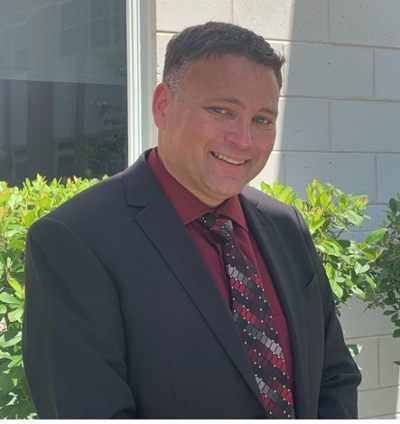
This week’s Project 100+ memory comes from Jim Erney. He was born in Atlantic City and raised in Egg Harbor Township. His father was a union carpenter, and his mother worked as both a teacher’s aide and as a secretary. He has one younger sister who graduated from Richard Stockton University. The only person in his extended family who had graduated from college before Jim was his uncle, Bob, who went to Glassboro State College and became a science teacher. Jim attended public schools and graduated from Egg Harbor Township High School in 1997. He began at Rowan in the Fall of 1997, graduating in the Fall of 2001 with degrees in history and secondary education. He landed a job immediately and began teaching world history and United States history at Oakcrest High School in January of 2002. He was very fortunate that this position opened up in the middle of the year when a teacher left for another job. He taught at Oakcrest until 2010, eventually teaching World Cultures and American History. In addition to teaching, he did a lot of coaching. He coached football every year and also coached girls’ basketball and track. In 2005, while at Oakcrest, he completed an online master’s degree in Sports Management at American Military University. Five years later, he completed his Supervisor’s Certificate from Rutgers New Brunswick. When Cedar Creek High School opened in 2010, he was able to transfer and be part of the inaugural faculty. At Cedar Creek, he taught United States History to World War I and AP Government. He continued coaching football, basketball, and became the head track coach. He slowly took on more administrative duties, while still teaching. In 2021, he completed his second online master’s degree, this one in Educational Leadership at the University of West Florida. In 2022, he took on a new position. He is now the school’s Athletic Director as well as an Assistant Principal and the Supervisor of the Social Studies Department. He has three kids and has great memories of being a parent and being lucky enough to coach his children in a number of sports. His oldest is entering his senior year.
*****
My father had a hard life, and he was adamant that I go to college. I don’t remember being that excited to go to college. I had been a fair but not great student in high school. I just did not have a choice. It was the path that was set for me. Two individuals in high school, however, helped prepare me for what I would study in college.
In 10th grade, however, I did have a great high school history teacher whose name was Mr. Manning. I had him for United States history, and he was old-fashioned. His teaching is not the model these days, but I loved it. He would start on the left-side of the chalk board and slowly fill it up moving to the right. Then he would erase and start over. He was dynamic and energetic. I loved these lectures. They were filled with such interesting details and information. His style resonated with me more than other students probably because I had come into the class with an interest in politics. At the time, I remember my father was laid off, which was something that happened regularly. The impact of this on my family led me to care about politics more than other people my own age. This interest in politics then made me receptive to learning about history, which was the only subject in school that seemed helpful for understanding how things had gotten to be the way that they were. In any event, I really looked forward to coming to Mr. Manning’s class for all these reasons.
The other person in high school who influenced me was George B. Wilkinson who coached me in football, indoor track, and outdoor track. He had this way of making each student who worked with him feel special. At the time, he would make you feel like you were his favorite student, that you were going to do great things, that you were a great athlete. Later, I found out that he made hundreds other students feel the exact same way. He could also be tough on you if that is what you needed, but his focus was more on support and empathy. He became a father figure for me, especially as I was had difficulty having conversations with my father during high school. Coach Wilkinson and I would have long talks about my future. I wanted to be a coach like him. We discussed that teaching history, which was the subject I liked most in school, would be a good major to pair with education. So, those were the majors I chose when I applied to college.
I got recruited to play football at Albright, the College of New Jersey, and King’s College in Wilkes-Barre, Pennsylvania. I thought I was going to go to King’s College. I remember playing football in the South Jersey All Star Game at Rowan. I stayed in Mimosa Hall for this week. It was during this time that I thought to myself that I didn’t want to play football anymore. It is hard to describe, but my body just told me that it was time to quit.
I ended up deciding to enroll at Rowan, which I had only applied to because my father had insisted on it, probably because his brother, Bob, had attended Glassboro State. After I decided that I didn’t want to play football, Rowan made the most sense. It was close to home and relatively affordable.
College was a shock to me. I had never toured Rowan or thought about college except as something that my father wanted me to do and, originally, a place to continue to play football. I really just didn’t know what I was getting into. For example, I remember being surprised that, in college, students didn’t have classes five days a week. There was all this free time in between your classes. One of the decisions that I made early on was that I was going to use this free time to become a good student for the first time. So much of my energy in high school had been about competing as an athlete. Now that I was no longer competing athletically, I through myself into this academic competition.
I remember that my first history class was Bob Hewsen’s Western Civilization class. I had never been on the internet before in my life, and his syllabus was only on the web. He gave us a web address, not a link, that you had to type in, but it was so long that it took up multiple lines on a page. I never found the syllabus. He eventually provided some of us sad cases with print copies of the syllabus. It was a tough class, but he was in a good mood because his book had been published.
The thing that I loved about being a history major were the upper-level courses. They were focused and on fascinating topics. I had Dr. Blake for Women in Islam and Arab-Israeli Conflict. It was such an important time to be learning this content. I was in her Arab-Israeli class the year before 9/11. As I result, I was much more prepared to understand what happened than others.
My favorite class was your Civil War and Reconstruction course, Dr. Carrigan. It was your very first semester teaching. You were passionate and dynamic. It was easy to relate to you, and the course felt like a conversation even though you did a lot of lecturing. In addition, there were specific things that you did in the classroom that I took and incorporate in my own teaching. I remember your giving us the documents that demonstrated without a doubt the role of slavery in prompting the South to secede. I would later use the same approach with my students because sadly the issue of the Confederacy and the role of slavery is still a living political issue. I remember your use of Ken Burns’s documentary, and I would later use clips myself in my teaching. In particular, I remember being moved by Sullivan Ballou’s letter to his wife and later showing it to my students who were also moved by it. My students and I then had some great conversations about the way that communication has changed over the years. I also remember your inviting us over to your home after the final class, a gesture that I still recall fondly all these years later.
I later took your History of the American West. This course was fascinating and a new topic to me. I thought that I would enjoy the Civil War course. When I enrolled, the instructor was just listed as “Staff.” However, after having you, I wanted to take you again. I remember well the way that you taught the West course to a class full of New Jerseyans. You helped us see the topic in a new and broader way. I used the same technique later with my students. I can also remember vividly a group activity in which we were challenged to figure out how Native Americans should have responded to the course of events. I remember realizing that they were no good options and our group decided to fight even though it was hopeless. I can still remember your calling for a break right after we revealed our conclusion.
Dr. Edward Wang helped me become a much better writer. I had him for Historical Methods. He taught me how to understand and analyze texts. In high school, I had thought that all nonfiction books were like textbooks. He helped me figure out how to analyze the intentions of authors and to grasp historical arguments. It was a demanding but very important class. I never skipped a preface again.
Outside of history, Professor Myers was very influential. He understood how I thought, and he helped me figure out ways that I could accomplish some of my outside-of-the-box ideas. This was in the very early days of our modern technology. I would tell him what I wanted to do, and he would show me how I could make my vision happen using modern tech. I remember him helping me integrate sound and video clips into PowerPoint at a time when no one on the history faculty was using PowerPoint. I remember having to stand in line to use a computer at lab. I don’t remember many students having a computer in their room when I first started. I think some had “word processors.”
Looking back on my time at Rowan, I wish I had spent more time on campus and had gotten more involved in extra-curricular activities. I was always coming home to work, and I wish I would have found a way to stay on campus more. I did join multiple honors societies, but I wasn’t too involved in their activities. One important and lasting thing that happened at Rowan was that I became very good friends with my freshman year roommate, Tom Filippone, a math and secondary education major. He became my best man at my wedding, and we are still good friends.
My four years at Rowan were incredibly transformational for me and the world. Personally, it was the time when I became an adult, the time when I realized the world was far bigger than the bubble that had been my world in Egg Harbor Township. I left high school fairly clueless about my own future, but less than five years later, I was confidently and productively standing in front of high school students who were not very different than me a few years earlier. This was made possible by education at Rowan. Added to this personal growth were major external factors. First, it was a time with such a rapid advance of technology. When I began, no one had cell phones and most of us had never been on the internet. Four years later, that world was gone. That alone made the era stand out, but the second thing that happened was September 11th. It took place on my during my second week of student teaching. I look back now and see the world as split by that moment. I was in Pitman Middle School on 9/11. I remember that the teacher had a television in his room, but it had antennae that could not really pick up the news broadcast well. I remember not fully understanding what was happening. I also remember that kids were getting picked up by parents, but I was still there, with some of the kids, when the towers came down. Even though I have taught over a thousand students in the years since, I still feel like I have a bond with those eighth graders. I can still remember their names and still close my eyes and see them sitting in their chairs.
*****
This is part of the Department of History’s “Project 100+,” an ongoing collection of
memories by Glassboro State College and Rowan University alumni and staff that began as part of the celebration of the 100th anniversary of the founding of Glassboro Normal School, later Glassboro State College, and now Rowan University. Due to interest in the project, the number of interviewees continues to grow. Thanks to Laurie Lahey for helping proofread and edit the final versions. Email carrigan@rowan.edu with questions or corrections. You can find the Link to all of the Project 100 and Project 100+ entries on the Web: https://chss.rowan.edu/departments/history/alumni_all/