Kris Myers
Kris Myers
“Much Credit”: Kris Myers (’02) on Phi Alpha Theta, Dewey Lounge, and Preparation for a Life in Public History
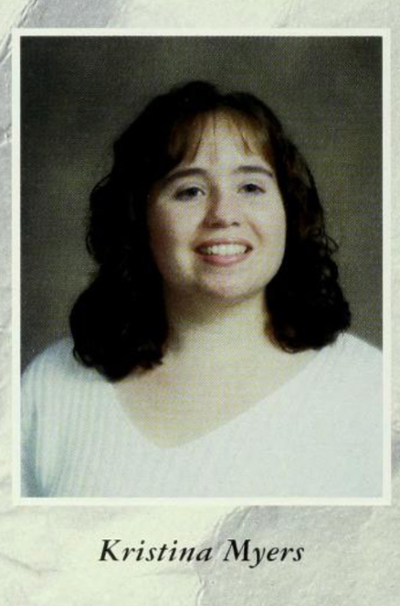
This week’s Project 100+ memory comes from Kris Myers. She was born in southern California, but she left before she turned two because her father, Tom, was in the Air Force. Kris and her family moved around for two decades living in such places as Okinawa, England, California (again) and Texas. She spent key moments of her childhood in southern England near Suffolk, living there from age four to ten. When her father retired, her parents, three sisters, and two brothers all moved to the Delaware Valley where both of her parents had been raised. At first, they lived near her mother’s family in Pennsylvania, and Kris graduated from Upper Darby High School in 1996. After she graduated, the family moved to be near her father’s family in South Jersey, and her father began to work for the post office. Kris’s mother, Joan, had worked in a bank before she met Kris’s father but dedicated her time to raising her siblings and providing daycare for other military families. Kris began studying at Rowan in the Fall of 1996, but she had to pay out of state tuition since they had only recently moved to the area. Although she and her parents tried, they could not make the finances work. So, Kris took a leave of absence after her first semester, and she spent a year working. By the time she returned in January 1997, she had saved money and qualified to pay in-state tuition. Kris graduated in the Spring of 2002 with a degree in H istory and a minor in Women’s Studies. She earned Medallions of Excellence in both History and Women’s Studies. That same semester, her older sister, Cheryl, graduated from Chestnut Hill College. Thus, they became the first two in their family to become college graduates. In January 2003, she began working as an administrative assistant at the Alice Paul Institute in Mount Laurel, New Jersey. She worked there for the next sixteen years, moving up from Program Assistant to Program Manager and finally to Program Director. In 2009, she earned a master’s degree in Liberal and Professional Studies from the University of Pennsylvania. She actually planned to pursue doctoral work in history and was accepted into the cultural history Ph.D. program at Drew University, but she did not enroll due to financial considerations. In 2018, she left the Alice Paul Institute for a position with the Women’s Leadership Council at Rider University. At the same time, she began to do some project work for the New Jersey Historical Commission, which she continues today. During those years she also taught history and gender studies courses at Rowan College at Burlington County, and The College of New Jersey. In 2023, she moved to the Historical Society of Pennsylvania where she is the Manager of Grants and Foundation Relations.
*****
I only applied to one college, Rowan. It was a chaotic time for my family, as we had not yet found our own house. We lived in the homes of various relatives and were not even always together. I had lived all over the world, and I had no desire to move away from my family. So, when they decided they were going to buy a house in Mt. Ephriam and stay in this area, I started looking into local colleges and soon found Rowan College of New Jersey, which became Rowan University during my first year. I changed my major several times during my first couple of years at Rowan. I can’t even remember all of these majors now but elementary education at one point and English at another. Eventually, I changed to history, a subject that I always loved when I was younger because I did well in the subject and also because of the influence of my father who loved it as well. I didn’t know what I was going to do with the degree. I think I thought that it would be wonderful to work in a museum, but I had no idea how to do that at the time. Or maybe I thought I might become a teacher, but the decision was really about how much I enjoyed the subject.
My first history class was United States History to 1865 with Lee Kress. He seemed to personify a classic history professor, and I must admit that he was very intimidating to me in that first year. Later, I got to know him much better and felt comfortable with him. Back in that first semester, however, I was new to college and still finding my way. I learned to come to class prepared. He would call on people blind, and you had to be ready. I was also not a great writer at the time. I do remember that I ended up pulling things together and finishing strong.
In my sophomore year, I took my first course with Edward Wang, one of the several faculty members in the Department that meant a great deal to me. That first course was Chinese Cultural History. I remember doing terribly on my first writing assignment for him. However, he invited me to his office for a conversation about the paper. He told me that it wasn’t a terrible paper, but it was not at all what he assigned, which was a scholarly book review. I had yet to have Historical Methods at this time. He told me how to write a proper book review, but he also noted that I had promise as a history major and that I should get involved more with the Department. He recommended that I become involved with Phi Alpha Theta, which was being advised by a brand-new faculty member named Bill Carrigan. I followed his advice. I soon met Dr. Carrigan and Al Beaver, who was President at the time. I became Treasurer in my junior year under President Salvatore (Sam) Abate, and I became President myself in my senior year. Later, I took two more courses with Professor Wang, Chinese language courses. I loved them and my time studying with him.
Dr. Gary Hunter was my professor for several courses. I think I first had him for Historical Methods. He was laid back but full of knowledge and great stories. I really enjoyed him, so I ended up taking multiple upper-level classes with him. I had never really learned very much about African American history and knew almost nothing about Sub-Saharan African history so those courses were eye-opening to me .
I also took multiple courses with Janet Lindman, and I absolutely loved her classes. I took American Women’s History and the History of Feminism with her. The content really aligned with my interest in women’s history, but I also really liked the way that she taught. She had a nice way of asking questions and leading discussion in such a way that it built to the main point she wanted us to grasp. It is hard for me to explain how much I enjoyed being in these classes and learning from Dr. Lindman. She was the one that recommended I reach out to the Alice Paul Institute when I was researching for my senior capstone paper in the fall, which led to an internship position in the spring. Both of those experiences led to being hired there and ultimately, to a career in public history. It was very exciting when Dr. Lindman later joined the Board of Trustees at the Alice Paul Institute and became Chair .
You and Dr. McDevitt arrived on campus at the same time in my second year. My fellow students and I found you both to be young and energizing. I took one course with Dr. McDevitt, an upper-level course on the history of Ireland. I can remember his great sense of humor which was important in a class that covered some really devastating and depressing history. It was quite an interesting experience.
I think that I may have met you first through Phi Alpha Theta. I ended up taking multiple courses with you, a summer section of your Civil War and Reconstruction and later History of the American West. You were also the professor who convened Field Service in History, for which I interned at the Alice Paul House. I remember that you really wanted us to engage and participate in class. My impression was that you wanted us to hear what we had to say and that your message was “tell me what you learned and what you think about it!” It felt new to me at the time as I had mostly survey courses before this time. Later, I found that other professors similarly pushed us to speak up in those upper-level courses.
One very memorable experience for me was presenting my research at the Phi Alpha Theta (PAT) conference during my junior year, which was hosted by Kutztown University in Pennsylvania. I think that both you and Dr. McDevitt travelled with us. It was my first ever presentation, and I was nervous. I can remember vividly that the faculty member who was to comment on my paper took out her knitting while I was speaking. I was taken aback but pushed on. I can remember having dinner at a diner after it was all over. My fellow student, Valerie Buickerood, won an award, which made us proud. Overall, it was a great experience, and I returned my senior year and presented a second time. The faculty advisor for this trip was Jim Heinzen, though you may have also attended. In any event, I never had a course with Dr. Heinzen, but I remember that he won the game show “History I.Q.”
My participation in Phi Alpha Theta, which you advised at the time, was very important to me. I can remember that I got a thrill from going into the Department conference room for meetings. It may seem strange now, but this was a special place to me and others. Being able to hold meetings in this room is just one of the things about PAT that made me feel like a developing professional and not just a student. During this time, we hosted a number of events and speakers. In addition, several of us, led by Laurie Lahey, founded a new history club, the Student Association History. I was Treasurer and then, in my senior year, President of Phi Alpha Theta.
Dr. Blake oversaw the Study Abroad program, and I was her student worker for a semester. She was very warm and friendly, and I wished I had taken a course with her. I can’t remember all that I did for her, but I do remember that I enjoyed learning about all these other parts of the world through working with her. My fascination with the rest of the world was strong even though I was still very much happy to stay in New Jersey after having travelled so much as a young person.
I had several friends in the major. I met many of them while studying or hanging out in Robinson Hall’s Dewey Lounge between classes. I was a commuter, so this was a great spot for me between classes. In addition to studying and resting, I can remember holding informal study group sessions in Dewey. One of the things that I realized is that leading a study session was a fantastic way to master material. I learned that being able to teach a subject was the surest way to learn the content. I have never forgotten this lesson.
One of the friends I probably met in Dewey was Christy Peterson, who I used to drive to campus with in the mornings. I loved her sense of humor. I remember one day after a really hard exam, she made me laugh and we hit it off from there. I was friends with Ed DeStefeno, another officer in Phi Alpha Theta. We did a lot of things together because we had so many of the same classes. I was also friendly with Valerie Buickerood while we were students. I think I remember that she drove a group of us to Penn’s Van Pelt Library for research. I think she also drove us to Kutztown. She was the Treasurer of Phi Alpha Theta while I was the President. Later, she joined me at Alice Paul, soon rising up to become the Executive Director. She had a great talent for nonprofit work, including the sense of humor that one needs to survive in the field.
I must mention Denise Williams, the Department’s administrative assistant. I loved her. She was so helpful no matter what question I had. At the time, there were two computers available for student use. Those computers were valuable to us as not all students had computers at that time. Naturally, while working on these computers, we talked to Denise. We may been distracting to her, but she never made us feel that way. I got to work with her a lot through Phi Alpha Theta and she would help me set up for events or make copies for meetings. She was friendly and encouraging and she made going to the Department welcoming.
I look back fondly on my years at Rowan. I was proud to be part of Rowan’s growth. At the beginning of my college years, I was so young and thought that I knew so much about the world given my travels. The Department helped me realize how little I actually knew! At the same time, the faculty expressed an excitement for history that I really responded to. I had such a great time in so many of my courses because of the diverse and exceptional faculty. They also gave me strong skills that have helped me in my professional life. Writing is essential to what I do now, and I learned how to write well because of the faculty in the Department. Dr. Lindman, in particular, deserves much credit for pushing me to always think, “Who is speaking? What are they (really) saying? Who or what has been left out?” of whatever piece I was analyzing. This way of thinking has helped me stand out many times. I still work in the field, and I still love learning about almost every period of history all these years later. Thank you!
*****
This is part of the Department of History’s “Project 100+,” an ongoing collection of memories by Glassboro State College and Rowan University alumni and staff that began as part of the celebration of the 100th anniversary of the founding of Glassboro Normal School, later Glassboro State College, and now Rowan University. Thanks to Laurie Lahey for helping proofread and edit the final versions. Email carrigan@rowan.edu with questions or corrections. You can find the Link to all of the Project 100 and Project 100+ entries on the Web: https://www.rowan.edu/ric-edelman-college/departments/history/alumni/