Kurt Creamer
Kurt Creamer
“Rarely a Spectator”: Kurt Creamer on Growing up with His Father, Marvin Creamer (’43)
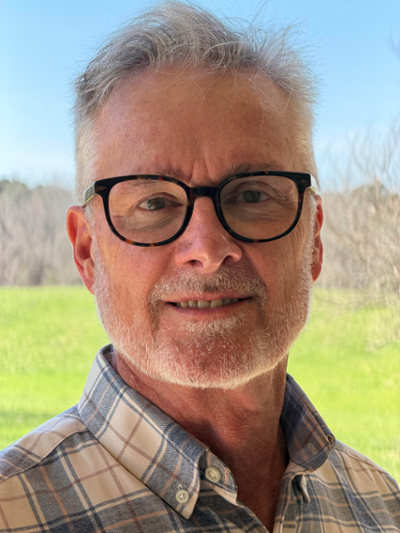
This week’s Project 100+ memory comes from Kurt Creamer. He was born in Mt. Holly, New Jersey, and he grew up on Glen Lake Boulevard in Glassboro for his entire childhood. Kurt has two older sisters, Andra who is seven years older and Lynn who is 18 months older. His father, Marvin Creamer, was a geography professor at Glassboro State College. His mother, Blanche Creamer, was a schoolteacher in her early adult years, but she quit teaching when Kurt and his sisters grew older. He attended the Campus School from kindergarten to 5th grade and then the Glassboro Intermediate School. In 1977, he graduated from Glassboro High School. He enrolled at Brown University that Fall. After graduating with a biology degree in 1981, he began graduate studies at the University of California at Davis, where he earned two master’s degrees, one in International Agricultural Development and one in Agricultural Engineering. Although he had originally hoped to find a job overseas, he took a contract research and development position at Battelle Memorial Institute. He did work for a variety of industrial and government clients, helping them solve various research and engineering problems in the field of renewable and conventional energy sources. He worked for Battelle for nine years, leaving when his family relocated to North Carolina. After some time, he got a product development position at Southbend, a manufacturer of commercial cooking equipment. After four years, he took a position in the technology transfer office at North Carolina State University (NCSU). Soon, he shifted to different roles within the University, focusing mostly on renewable energy education and demonstration. He spent seven total years at NCSU before taking a position at Novozymes where he worked on the development of enzymes for the biofuels industry, including enzymes used in the production of low carbon footprint cellulosic biofuels. In 2025, after seventeen years, he retired, coincidentally on the same day as the birth of his first grandchild. He lives in Mebane, North Carolina. During retirement, he plans to concentrate on his favorite hobbies, namely beermaking, learning to play the guitar, bicycling, playing tennis, gardening, and cooking.
*****
One of my early formative memories of my father was a trip that the family took to Alaska when I was five or six years old. All five of us drove all the way to Alaska in a travel trailer. This was 1965, and the Alaskan Highway was not yet paved. We travelled with another family, and we kept in contact with them via CB radio, which was cool for a kid. We had several close hair-raising calls, but I have wonderful memories of the camping and all the outdoor experiences we had on this trip. My father would often just approach these farmers and ask if we could camp on their farm. Even for the 1960s, I think he was bold in doing such things. He was always a very curious person, and I can remember him being very interested in so many things that we came across during this trip. For example, he wanted to know what crops were growing in this or that field, how this fish processing facility worked, etc. He certainly took notes and photographs and incorporated them later into his teaching. I always got the impression that he had us pose in these photos just so as to give his students a sense of how tall the crop was!
Of course, I have many memories of my father in our family home. I can remember him grading his multiple-choice exams. He had this key that he used. He would line up this key next to the answers and rapidly grade these exams. Later, he would give us the exam and always tell us if we had done better than some of his students. We usually bested at least two or three of them as I recall.
Rain or shine, he always rode his bicycle to campus. I can remember that it had a basket on the front where he placed whatever papers he was transporting. My parents were both frugal as children of the Great Depression. My mother, even more than father, was really impacted by the challenges of her childhood. In addition, both of my parents also believed very much in preserving the environment. In any event, it was a very short bike ride to his office, which was in Bozorth Hall when I was young (and later in Robinson Hall).
Another memory from my early days was attending football games on the campus. This was a big deal to me – my father was so rarely a spectator. He always wanted to be doing things, and he kept us doing things too. I was a big Phillies fan as a kid, but we never went to a game in person, and I don’t think we ever watched a game together. So, for us to spend several hours, just him and me, watching a football game together was such a completely different experience that it was always special to me. I can remember a running back named Harold Hill (’73) who was just so amazing to watch run the ball.
My father was passionate about his teaching, and I think he went above and beyond the call of duty to provide real world experiences for his students. He enjoyed all the travel that we did, but I think it always served a second purpose, which was to enrich his teaching. Moreover, he always seemed to be embarking on special extra-curricular activities with his students to get them out of the classroom. My father cared a lot about his students and about the College itself. This meant that he naturally clashed at times with some of his colleagues and administrators. However, overall, he really enjoyed his time at the College.
His best friend at the College, I think, was Lee Weiss, who I remember as being in the Industrial Arts Department. They became especially close when my father got really into sailing. Lee shared this interest. They particularly bonded over their passion for all the engineering and mechanical aspects of sailing. I also remember Musty Husain spending quite a bit of time at our house when I was young. I can also remember several of his fellow geographers, Wade Currier, Ed Behm, Chet Zimolzak, Charlie Stansfield, and Jerry Lindt.
I was with my father on his first ever attempt to sail without instruments. This was a trip from Ireland back to New Jersey. I flew to Ireland to join him after my first year of college. This was a 39-day trip where he perfected his ability to look at the stars so as to be able to navigate without modern instruments. His passion for sailing at this time was tremendous. When my father went on his round-the-world trip without instruments, it was just my father being my father to me. Now that I am the same age as he was when he went on this journey, I am just amazed by what he did and by how much he was willing to endure and by how much he was willing to risk to scratch this powerful itch he felt.
Having Glassboro State College so close to our home provided so much cultural enrichment to me and my sisters. The Campus School was amazing, and we also had access to so many talented faculty members. I can remember taking lessons with some of the College’s fantastic music faculty. My sisters and I were always learning new things. This was probably in part because of my father’s direct influence, but it was also just from his example. He was so curious and passionate about lifelong learning. Today, I feel the same way, and I consider this trait one of the great contributions of my father to my life.
*****
This is part of the Department of History’s “Project 100+,” an ongoing collection of memories by Glassboro State College and Rowan University alumni and staff that began as part of the celebration of the 100th anniversary of the founding of Glassboro Normal School, later Glassboro State College, and now Rowan University. Thanks to Laurie Lahey for helping proofread and edit the final versions. Email carrigan@rowan.edu with questions or corrections. You can find the Link to all of the Project 100 and Project 100+ entries on the Web: https://www.rowan.edu/ric-edelman-college/departments/history/alumni/