Paul Buzzi
Paul Buzzi
“All the Support I Could Have Wanted”: Paul Buzzi (‘19) on Growing, Learning, and Finding My Passion for Researching
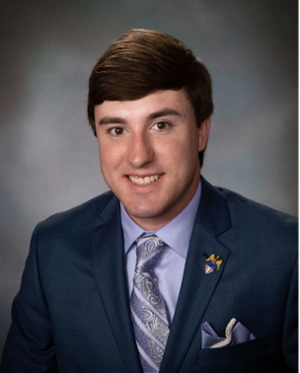
This week’s Project 100+ memory comes from Paul Buzzi Jr. He was born and raised in Delran, New Jersey. His mother, Miriam, teaches special education at the elementary level in Camden. His father, Paul, Sr., is now retired but worked at a chemical factory in Bristol, Pennsylvania and graduated from Glassboro State College in 1977. Paul Jr. attended public schools and graduated from Delran High School in 2015. From 2015 to 2019, he attended Rowan University, graduating with a major in history and minors in German and Education. The covid pandemic began not long after he graduated, making his entry into the job market challenging. He wanted a job in public history, but he was unable to find one. Eventually, he turned to other careers and took a job as a realtor, which he did for a little over a year. He left this to work in the Parts Department of a John Deere dealership. He soon shifted to working for a Mercedes-Benz dealership, which he did for two years. Recently, he has worked on a local tourist farm as a hayride driver, customer service assistant and farm operations assistant. Currently, he is planning on going back to school for a teaching certificate so he can teach history at the high school level. He plans to enroll in the “Aspire to Teach” program at Rowan University.
*****
During middle school, I decided that I wanted to be a teacher. From that point on, I knew that I wanted to go to college. Originally, I wanted to be a science teacher because of the great experiences I had in my 6th grade science class. During high school, however, I became interested in United States / World history, local history, and public history. There were several factors, but this interest was certainly sparked by current world events and on the local level by witnessing the loss of so many historic farms, historical buildings, and natural resources near where I grew up. During my senior year, I applied to several schools and was admitted to Rowan University through the Rowan Select program. This special program was designed for students like myself who fell slightly below standard admission criteria and would be required to take an extra course during the summer before Freshman year. I completed that course and was officially admitted to Rowan as a history and education major and I could only imagine how successful I would by the time of graduation. I commuted from home because it saved my family money, but I also liked living at home and did not have a strong desire to live on campus.
My first year was challenging, as it was a definite step up in difficulty from the work that I did in high school. I had to spend a lot of time meeting with faculty members during their office hours to catch up and gain the skills I needed to succeed. One of the faculty members who helped me was an adjunct professor named Lawrence DeVaro who taught Western Civilization to 1660. He spent a lot of time with me outside of the classroom. My composition courses were also challenging, and I got a lot of great support from Dr. Marie Flocco in those courses. Other staff members that helped me through this time were Ms. Christen Larsen-Britt, Ms. Nadia Rahin, Dr. John Woodruff, Mr. Noah Weinstein and Ms. Jessica Dean. This was a hard period of time for me, and I thought about dropping out of college entirely. However, with the help of these individuals and others, I became more comfortable, improved my academic skills, and made the decision to stay and complete my degree.
During my second year, I began to take upper-level history courses. I became more comfortable and got to know my fellow students better. I continued to work hard to improve. One turning point was the research that I had to do for Historical Methods and my other upper-level history courses. I found that I really enjoyed this type of work. I loved the fact that I could produce something that was my own contribution to historical knowledge based on my own research, looking at sources that few others had perused. I also found that historical research rewarded my patience, diligence, and hard work. Dr. Hague taught Historical Methods, and I wrote a paper entitled “Winston Churchill’s and William Sherman’s Use of Total War” for this class.
That spring I took a teaching course that included preliminary field work at a local school. My classmates and I went to one of Bridgeton’s Elementary schools and we were assigned a teacher to work with. I enjoyed working with my assigned teacher and I liked helping the students with their classwork. It was very rewarding how much the students appreciated my assistance and when they would greet me in the hallways.
By the fall of my junior year, I took two courses with Dr. James Heinzen on Russian history. This information was almost all new to me and broadened my understanding of the world. I can remember feeling that I really grasped what was going on globally better after taking his courses. Dr. Heinzen also spent a lot of time working with me outside of class to help me improve my researching skills. Lastly, I found Dr Heinzen’s personal experiences of visiting Russia for research projects fascinating and eye opening.
Outside of the classroom, I became friends with Kyle Scripko and Steve Marchesano. They recruited me to join the Student History Association and, later, the honors society, Phi Alpha Theta. Even more importantly, I began doing a lot of work with local historical societies. In 2016, I began volunteering at the Delran Historical Society. Later, they asked me to serve on their Board of Trustees. I also did work during this period to try to save a historic home and barn from being demolished by a developer. Although I did not save the building, I used the skills that I had learned in college to document the historic nature of the buildings, and I took photographs so that not all was lost.
In the spring semester of my junior year, I again had Dr. Hague, this time for Seminar. For his course, I wrote a long paper on the historic house in which my family lived. I loved doing this research. I combined the archival skills I learned with the tools of material culture to tell this story. I eventually discovered that the house was built in 1823 and uncovered the names and lives of the previous inhabitants.
In the summer of 2018, I began working at the Whitall House at Red Bank Battlefield. I did this before taking Dr. Jennifer Janofsky’s Public History course. I loved this class as it exposed me to many things that I did not know while also speaking to my long-time interest in local and public history. I really liked working at the Whitall House, and it was interesting to experience the behind-the-scenes elements that keep the museum running smoothly. I found the work rewarding and this experience sparked my interest to continue in the field. At this same time my career plans to become a teacher got turned upside down, since the State of New Jersey increased the time to complete student teaching to a full year from a semester. As a result, I felt the best way forward was for me to drop the secondary education major to a minor.
Now came my senior year and I began with Dr. Mikkel Dack’s Nazi Germany course, and I think it was his very first year. The course was fascinating and on a really interesting topic that had long intrigued me. In fact, I was enrolled in my third German language course at the same time. Dr. Dack’s course seemed sadly too relevant to current events in the world. Perhaps due to my involvement in public history, I had become more interested in government. It was frightening to see how a democratic government could fall apart so quickly. I also really enjoyed the way that Dr. Dack taught the course. He used videos, photos and primary sources from the period, and I loved how he led us in discussion. I can remember he assigned interesting papers that improved my writing and thinking skills.
That spring I took your History of New Jersey course, and I really enjoyed it. I have a deep interest in the region where I live, and I had never had the opportunity to study this topic formally. One thing that I particularly liked about the course was that you assigned many primary sources from a wide range of New Jerseyans, both famous and relatively ordinary. At the time, I remember thinking that your reading load was heavy. In addition to the primary sources, we had several longer books. However, I have appreciated these readings even more in the years since the class ended. In fact, I now certainly wish that I had you earlier in my education so that I could have taken more classes with you. I can remember particularly enjoying the relatively long section in your course on deindustrialization. This resonated with me due to the experiences of my father who had worked in a factory. In fact, I chose deindustrialization for my final project for the class, which gave me a good reason to connect further with my father. I liked the way that this project brought together several strands of my learning.
Outside of the history department, one of the most important courses I took was Honors Cultural Geography with Dr. Jennifer Kitson and Mr. Micheal Benson. The main project for the class was to research Glassboro’s History and connecting it to the present. We did field trips to the Heritage Glass Museum, St. Thomas Episcopal Church and the West Jersey Depot Museum. This class was so intriguing because we got to go out and work with the community. For my project, I chose to study Glassboro’s prison labor camp during World War II. The prisoners were Germans, so it fit very well with my interest in German studies. I visited one of the farms where the prisoners worked and found that the family still possessed photographs of the prisoners as well as drawings made by one of the prisoners. Some of the prisoners did not go back to Germany but remained in New Jersey and made lives here after the war. My finished project is available through the Glassboro Historical Society’s website.
My experience at Rowan was life changing. I had so many faculty members who worked with me outside of the classroom. I was not as well prepared as I might have been, and I needed this support. I found almost all the faculty willing to answer my many emails and to meet with me individually. Once they realized that I was willing to work hard to improve, they gave me all the support I could have wanted. Through my courses, I also gained a broader understanding of both global and local events. Over my four years at Rowan, my confidence and academic skills greatly increased. The ability to write, research, and think critically are helpful to me every day. Earlier this year, I was appointed a member of the Delran Township Planning Board, a position that I am sure I would not have achieved without my work at Rowan. I also continue to serve on the Delran Historical Society Board and am currently Vice President. I know my experiences at Rowan have given me the tools to be successful in life and to overcome its challenges. I know it will be interesting to see all the experiences that I will have and the positive impacts that I can make throughout my life!
*****
This is part of the Department of History’s “Project 100+,” an ongoing collection of memories by Glassboro State College and Rowan University alumni and staff that began as part of the celebration of the 100th anniversary of the founding of Glassboro Normal School, later Glassboro State College, and now Rowan University. Thanks to Laurie Lahey for helping proofread and edit the final versions. Email carrigan@rowan.edu with questions or corrections. You can find the Link to all of the Project 100 and Project 100+ entries on the Web: https://chss.rowan.edu/departments/history/alumni_highlights/project_100/