Phillip Hannum
Phillip Hannum
“Excellent Preparation”: Philip Hannum (’79) on Finishing His Degree at Glassboro State and a Life of Adaptation
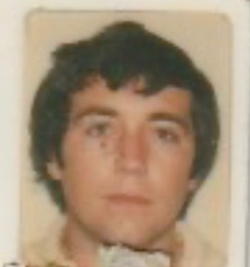
This week’s Project 100+ memory comes Phil Hannum. He was born in Somers Point and raised on the Jersey Shore in Linwood and Northfield. His father was a bookbinder who rose up from apprentice and journeyman to become an expert in rare books, eventually gaining a position at the Library of Congress in Washington, D.C. His mother was a housewife who had five children, with Phil being the eldest. Phil attended public schools in the Northfield school district and had his grandmother as his sixth-grade teacher. In 1963, his family moved to Virginia. He arrived one year after the local public schools had finally integrated. Four years later, in 1967, he graduated from George Mason Jr./Sr. High School. In the Fall of 1967, he enrolled at Virginia Military Institute (VMI) on a football scholarship. At the time, the school and football team was all-white. A year later, in the Fall of 1968, African Americans began to enroll at VMI. He knew the challenges of integration for these new students as his high school had become integrated during his sophomore year. He went out of his way to be friendly to them and help them with the adjustment. He was a northerner in a southern college, and there were many surprising things to him. One of these was the cheering that erupted from many of the southern cadets when they heard that Martin Luther King, Jr. had been assassinated. Fortunately for Phil, not all of the cadets felt this way, including his roommate who was from Long Island. This was not the only hard issue for him at VMI. Another one was the football coach, with whom he did not get along even though he played. He loved his high school football coach and would have followed him wherever he led. In addition, he was an English major at VMI and read Henry David Thoreau, including both Walden and his essay, “On Civil Disobedience.” This impacted him very much and led him to rethink his future. He was in the Reserve Officer Training Corps (ROTC), which gave him a deferral from the draft. However, VMI required students entering their junior year to sign a written contract that said that, if the student failed to graduate, they joined the United States military as an enlisted man. This contract, combined with all the other things mentioned as well Phil’s struggles in foreign language – VMI required three years for English majors – led him to decide not to return to college for that junior year. This exposed Phil to the draft. In October, he received a draft notice and passed his physical and became “1a,” which meant he was available for immediate military service. In late November or early December, however, Nixon instituted a lottery system. Phil’s number ended up as 229, and the draft only got up to 195 by the end of 1970. Even though he had avoided the draft, he was unable to get a job. At the time, employment applications asked male applicants for their draft status. If one put 1a, as Phil had to do, they never hired that person as they could be drafted anytime. Later, they changed those in Phil’s position to a new status, 1h. Phil ended up getting a job with a concert promoter and helped set up touring musicians such as Bob Seger, Yes, Alice Cooper, Humble Pie, Jethro Tull, and many others. His boss liked him because he didn’t use drugs and was reliable. During this year, Phil enrolled at Northern Virginia Community College where he changed his major to history. He also joined a rock and soul band and played trumpet. The following year he enrolled at George Mason University, but they didn’t accept many of his classes from VMI. He had a total of 90 credits but was not that close to his degree still. After a frustrating experience with a job application where he was passed over for a less qualified individual, he remembered Thoreau and decided to move back to his native New Jersey where he could spend time outdoors. He spent seven years hunting, fishing, and trapsing through the bays and estuaries of southern New Jersey. During this time, he worked at a collection agency to pay the bills, but his life was in nature. However, a friend of his told him that he should really finish his college degree. Further, he knew that New Jersey was more accepting of transfer credits. When he learned that the history program at Glassboro State College didn’t require a foreign language, he decided to follow his friend’s advice and made an appointment with the admissions director at GSC, Mr. Collins. He told Phil that he would only need 30 hours to graduate, and Phil enrolled and began classes in the Fall of 1976. On the same day that he graduated in 1979, his son was born. A year later, his father died, and Phil moved to Virginia to help out his mother. He then completed a master’s degree in forensic science at George Washington University. In 1982, after graduating from the police academy, he became a patrol officer in Falls Church, Virginia. With his expertise in forensic pathology, he did well and became a detective in 1984. A year later, he won an award as officer of the year in Falls Church, focusing especially on the work of Vietnamese gangs in the city. In 1990, he was involved in a dangerous encounter with four Vietnamese robbers who drove to the East Coast from Orange County, CA and they orchestrated a home invasion and robbery. He survived an armed situation, wounding one robber and they captured the criminals, who each got two consecutive 75-year sentences. A couple of years later, he decided to leave the police and move into the telecommunications industry where he did corporate security. After five years during which he worked at several different telecommunications companies, he moved into the financial industry, again doing corporate security. He ended up working with the Federal Bureau of Investigation, the Secret Service, and local police on embezzlements, bank robberies, and much more. In 2003, he took a position as Vice President of Investigations at Riggs Banks, which had come under scrutiny because they had held some of the funds used by the 9/11 terrorists. At Riggs, he did much work on anti-money laundering in addition to the other problems he had long investigated. He left Riggs to be Head of Security at Apple Federal Credit Union, where he worked for twelve years before retiring in 2016. In the past ten years, he has done a wide variety of things, including blogging and writing a book on one of his areas of expertise, Vietnamese gangs. This was a topic for which he had a long interest, going back to the 1980s. Another very important part of his recent life has been his faith, which had greatly deepened in 1994. After retiring, he became a Billy Graham Rapid Response Team chaplain and began traveling to areas of disaster where he meets with and prays with various impacted victims of disasters and volunteers. He also volunteers with the Rev. Franklin Graham Festivals, which has taken him all over the world, most recently to Madrid.
*****
During my time at GSC, I took only night classes and commuted from Pomona, a fifty-mile trip each way. My first history class was a mandatory one on terrorism that emerged as a result of the recently completed international conference hosted by Marius Livingston during the summer of 1976. I am not sure the name of the professor, but it may have been Aaron Bender. Interestingly, I later learned that Marius Livingston had a major role in designing the social studies elementary curriculum for all of New Jersey and that I had benefitted from him in this way.
That same semester I took a class with Robert Harper on John Adams, The Adams Chronicles. Dr. Harper was a World War II veteran who had used the GI Bill to go to college and had earned his doctorate at American University. He wanted to explore new topics, and I liked him as a professor. He was easy to talk to outside of class. I ended up taking three classes with him, The Adams Chronicles, Historiography, and The History of New Jersey. He emphasized the Quakers in his New Jersey classes. For the historiography class, I can still remember my paper, which was on the 1772 Quartering Act of Parliament. I can remember that my paper frustrated Dr. Harper because I used my research to reveal the hole in Thomas Paine’s Common Sense. During my last semester, Dr. Harper wrote a letter of recommendation for me to attend law school. I drove to pick it up from him and thanked him for all that he had done for me. I was accepted at Western States Law School in San Diego, but I never attended. My son had been born on the day of my graduation, and my father died a year later. I ended up moving to Virginia to help my mother, and I switched to another path and completed a master’s degree in forensic science at George Washington University.
In addition to history courses, I had to take a few other classes. One of these was a water safety and swimming course. Another one was a public speaking class. Perhaps the most interesting was a photogrammetry course with Wade Currier of the Department of Geography. This course focused on analyzing aerial photography, Dr. Currier’s expertise. In fact, he had advised the Central Intelligence Agency before he began teaching at Glassboro State. He clearly knew what he was talking about, and he maintained high standards. Many of my fellow students struggled because of the math that was required. You had to be able to calculate the speed of the plane taking the photographs to properly analyze the images. I caught on quickly and did well. I can remember several times that he said that he could not share certain information that was still top secret at the time, mostly involving the existence of satellites. In my opinion, he gave really good, positive feedback.
I took Richard Porterfield for Western Civilization. He was a relatively young professor compared to the other faculty. Previously, I had sometimes struggled with this course material, as I was overwhelmed with dates and wars. However, Professor Porterfield really helped me understand this history for the first time. Like all of the faculty at Glassboro State, he was very approachable, and I often went to his office for help and guidance.
One of the other history courses I took was on the United States Homefront during World War II with Sidney Kessler. I still remember the paper that I wrote for him. It was on “conscientious objectors” during World War II, focusing on Desmond Doss, a combat medic who refused to carry a weapon and later was featured in the film “Hacksaw Ridge.” Professor Kessler had some problems with my paper, perhaps because he was Jewish and not as sympathetic to World War II conscientious objectors as I was presenting in my paper. In any event, we got along fine and had good meetings outside of class about the course. He later signed my waiver that I needed to be exempted from a second, required, non-western history course.
I had a challenge taking non-western courses because they were rarely offered in the evening. One course that did count in this regard was Robert Hewsen’s course on the Byzantine empire. He held a doctorate from Georgetown University. There were only six students in the class, and he told us that it was a combined graduate and undergraduate class. His teaching and that course made me a better student of the Bible. I remember learning about Justinian’s code with Professor Hewsen, which helped me later when I was studying the common law as a Police Detective. I can remember him teaching us about Diocletian’s Reforms and the history of the debasement of coinage. He would stay late after class and talk to you about anything. I can remember asking him how the Christians of the Byzantine era justified the various palace assassinations that took place. He gave compelling answers for the history, while acknowledging that these leaders were not following their religious principles closely.
My time at Glassboro State College has long stayed with me. I have had a wide-ranging career with many zigs and zags and done many different things, and I think my history degree was excellent preparation for all this adaptation. I also think about my history degree when I am doing Bible Study. My course with Robert Hewsen has been a constant aid to me in this work. My understanding of the many translations of the Bible have given me a deeper understanding and a stronger ability to analyze. I continue to give to the Annual Fund at Rowan because of its lasting impact.
*****
This is part of the Department of History’s “Project 100+,” an ongoing collection of memories by Glassboro State College and Rowan University alumni and staff that began as part of the celebration of the 100th anniversary of the founding of Glassboro Normal School, later Glassboro State College, and now Rowan University. Thanks to Laurie Lahey for helping proofread and edit the final versions. Email carrigan@rowan.edu with questions or corrections. You can find the Link to all of the Project 100 and Project 100+ entries on the Web: https://www.rowan.edu/ric-edelman-college/departments/history/alumni/