Diane Burko: Extraction, A Dialogue of Extremes
Diane Burko: Extraction, A Dialogue of Extremes
Diane Burko: Extraction, A Dialogue of Extremes
August 24 - October 17, 2026
RUMOCA at 301 High Street
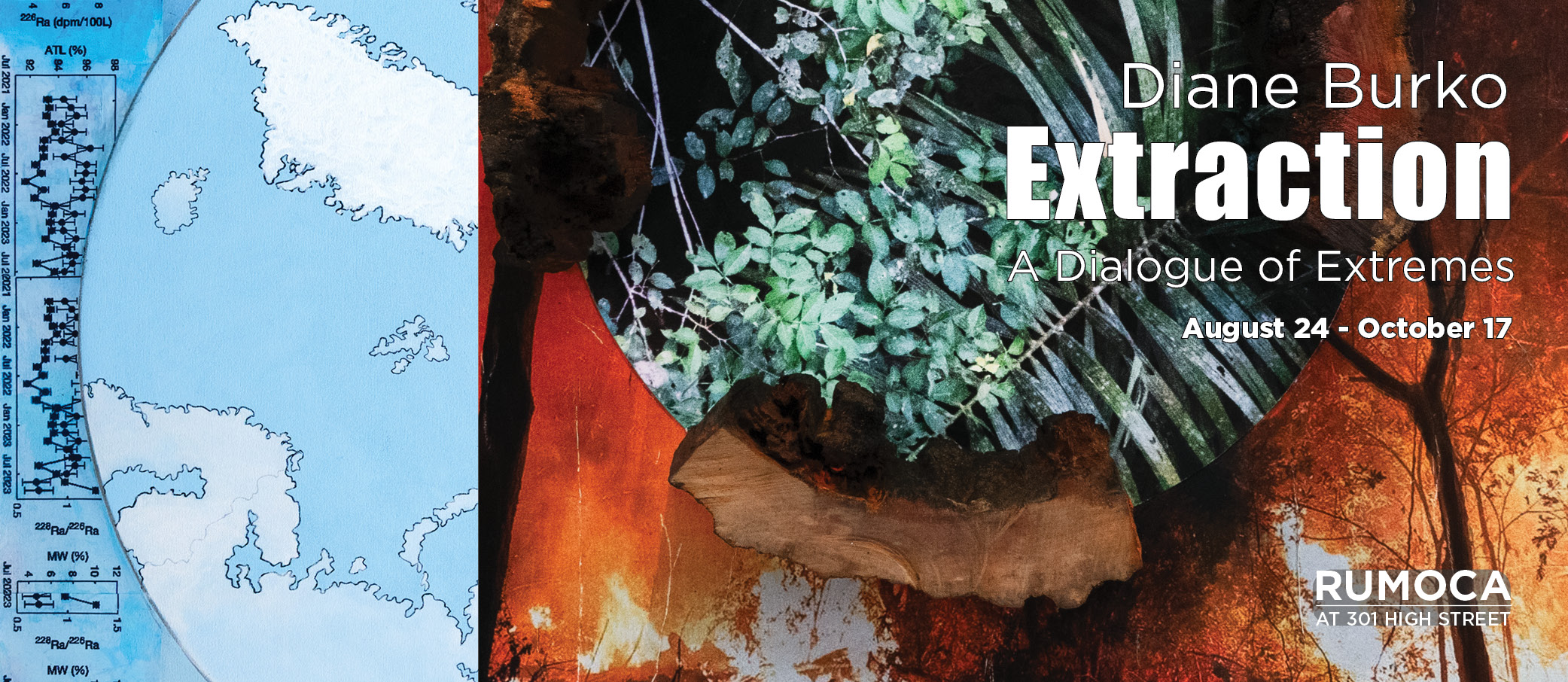
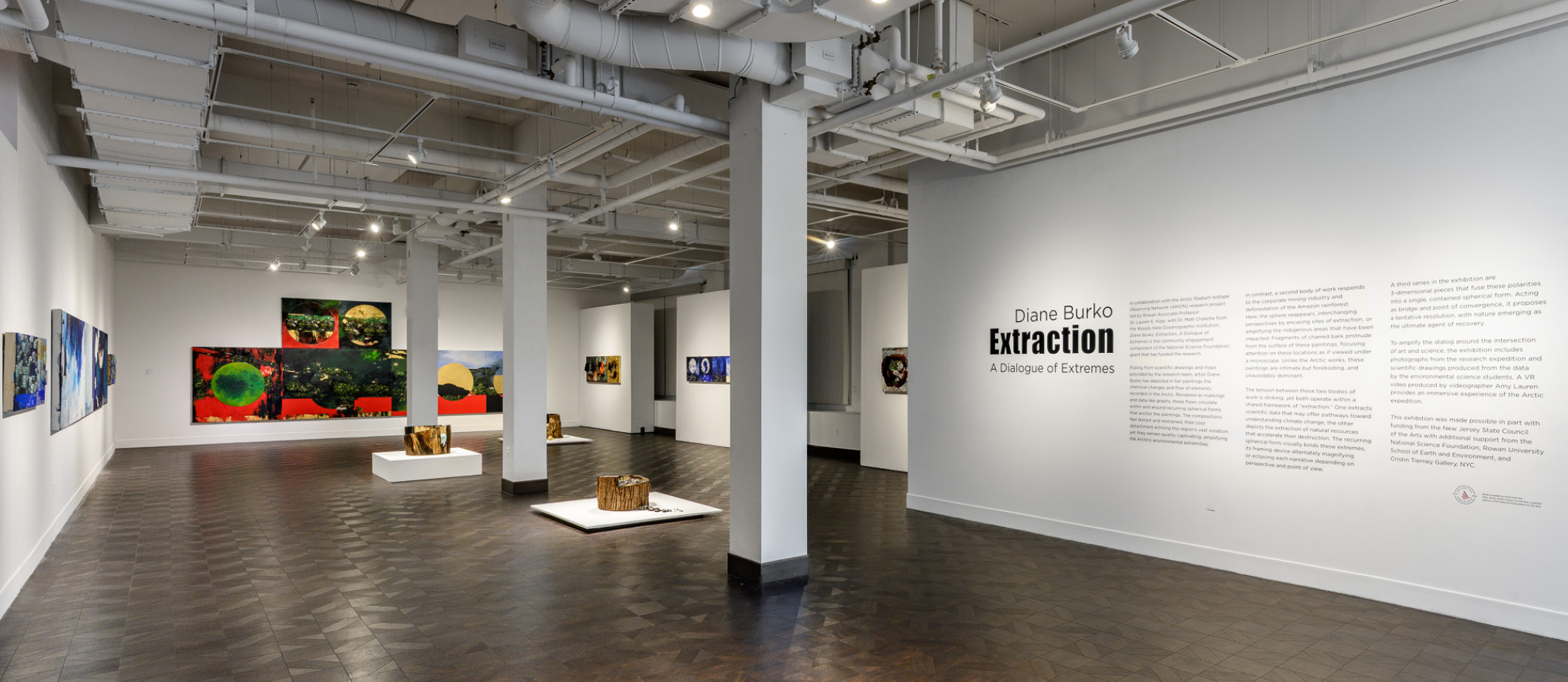
In collaboration with the Arctic Radium Isotope Observing Network (ARION) research project led by Rowan Associate Professor Dr. Lauren E. Kipp, with Dr. Matt Charette and the Woods Hole Oceanographic Institution, Diane Burko: Extraction, A Dialogue of Extremes is the community engagement component of the National Science Foundation grant that has funded the research.
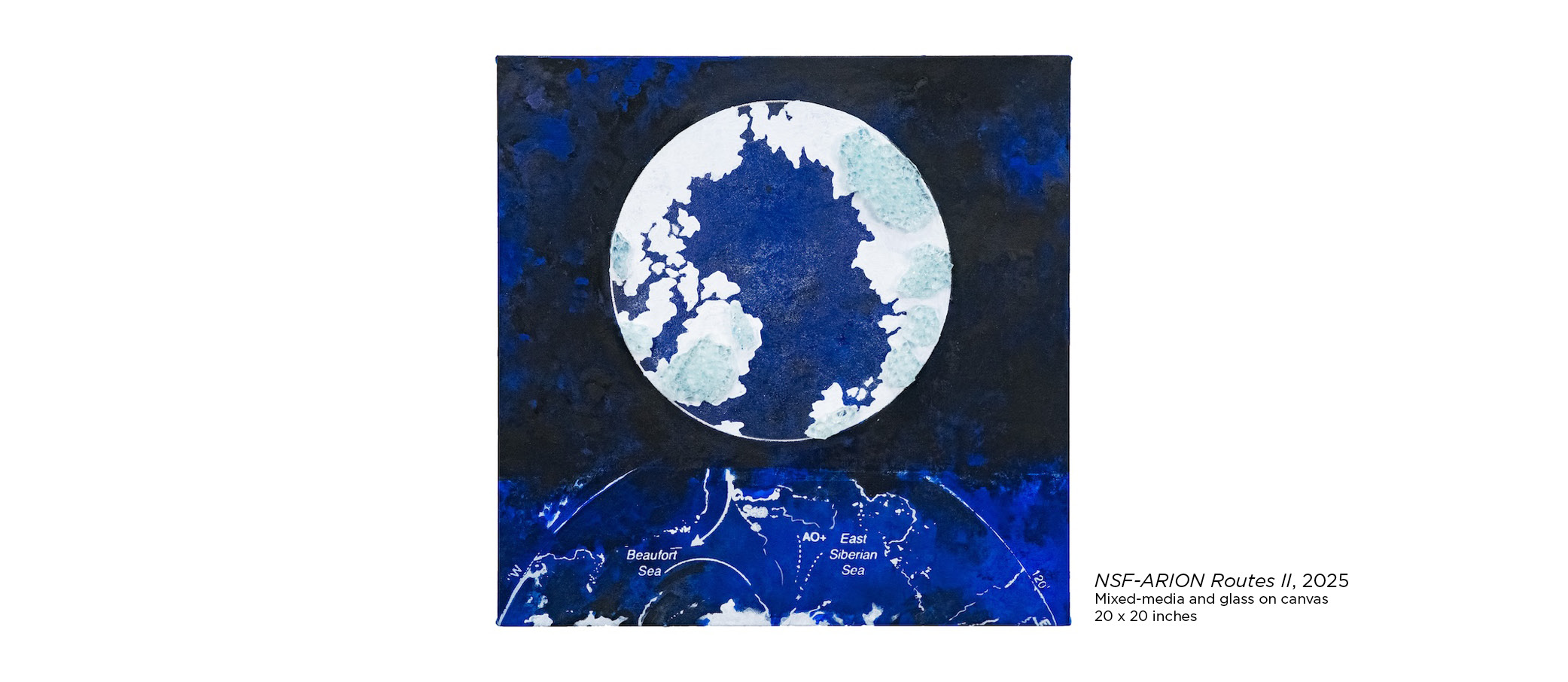
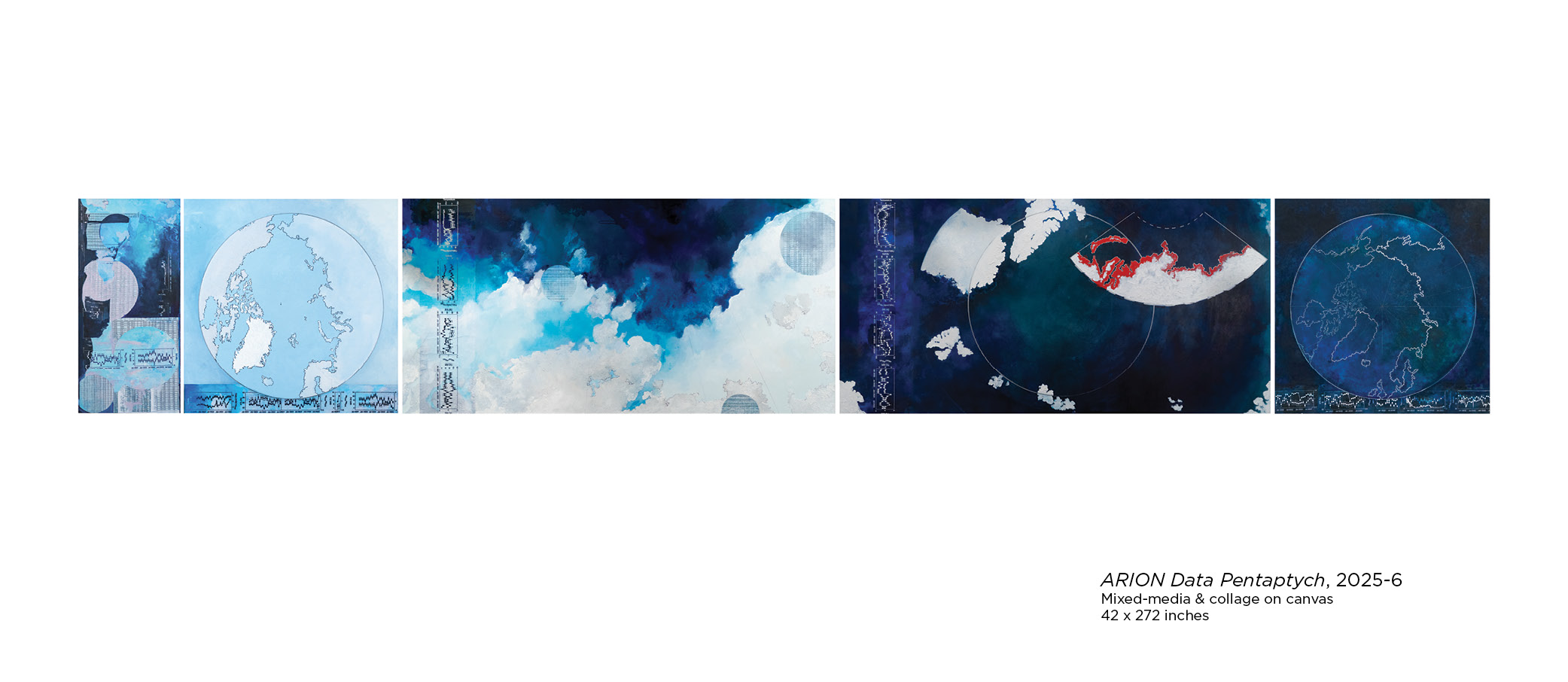
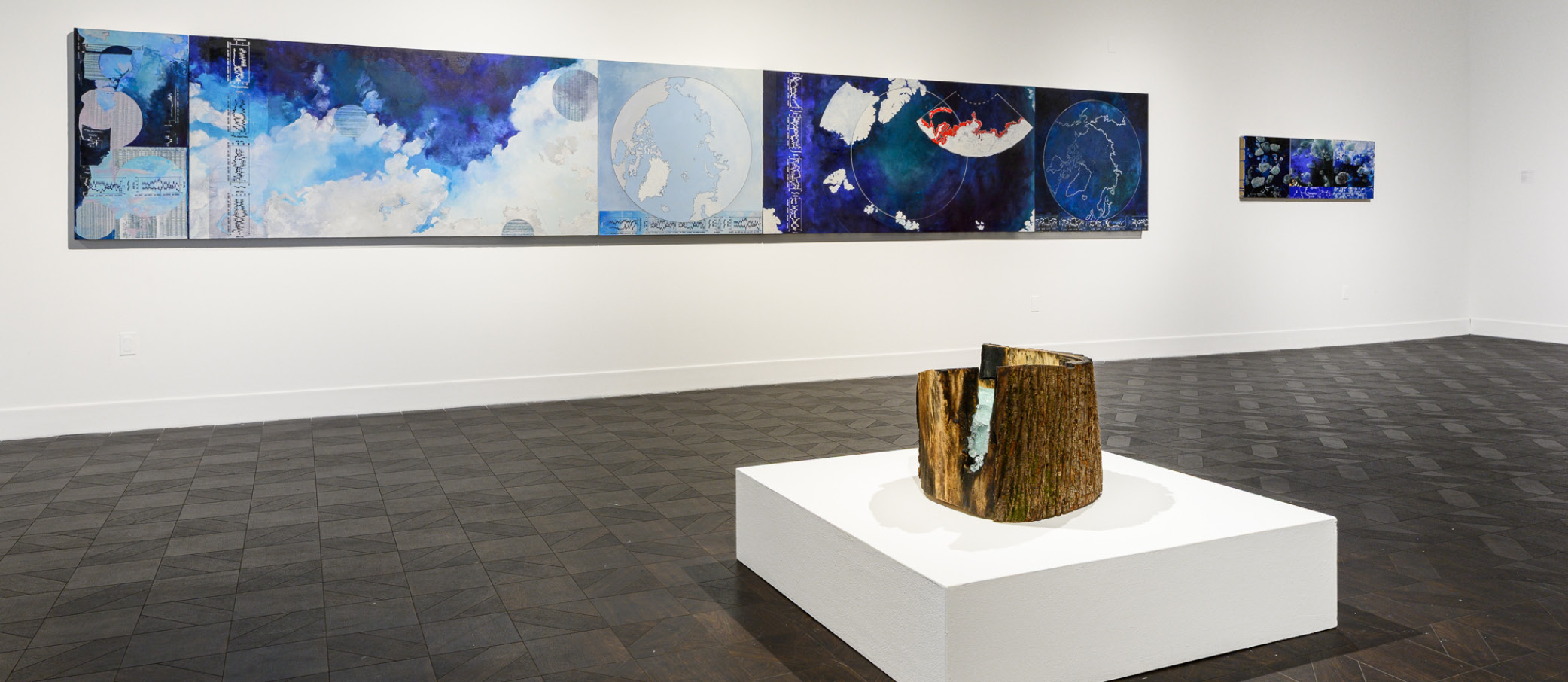
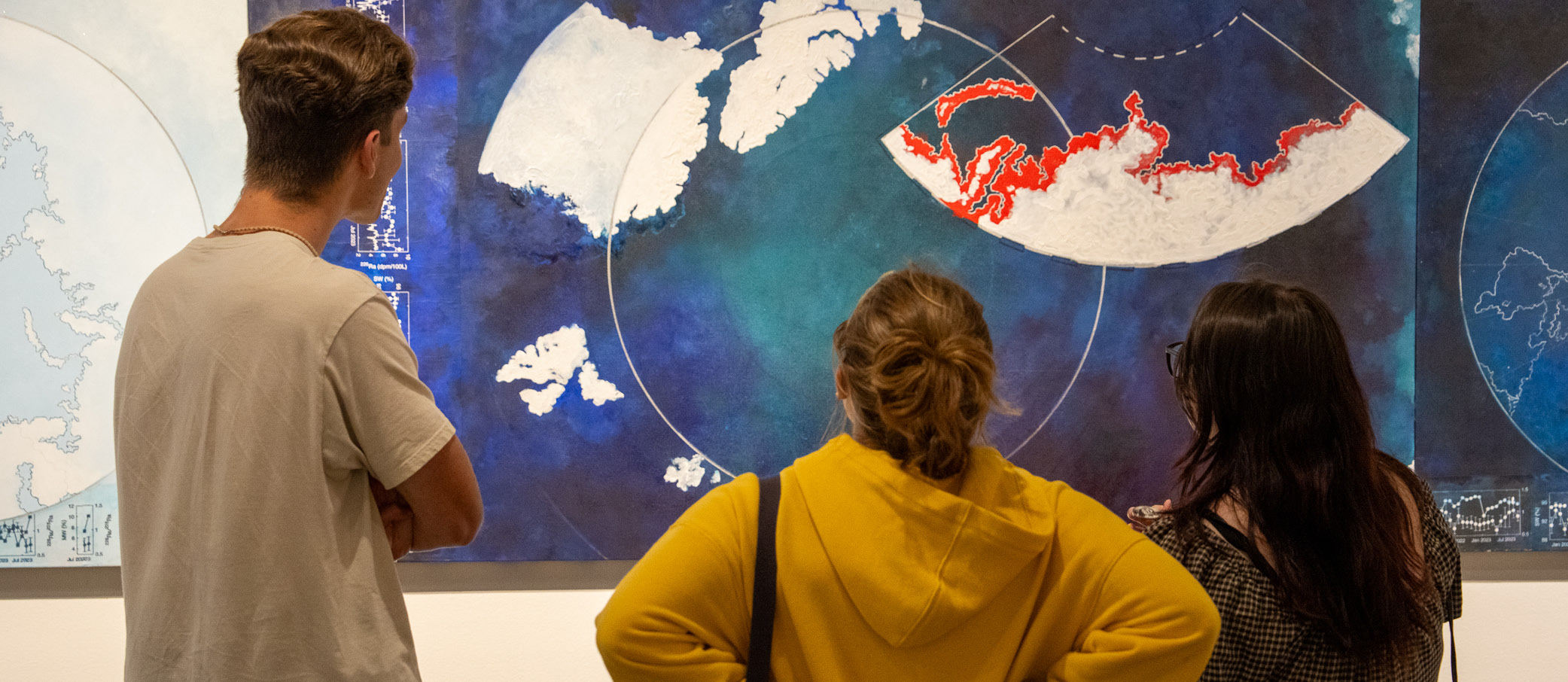
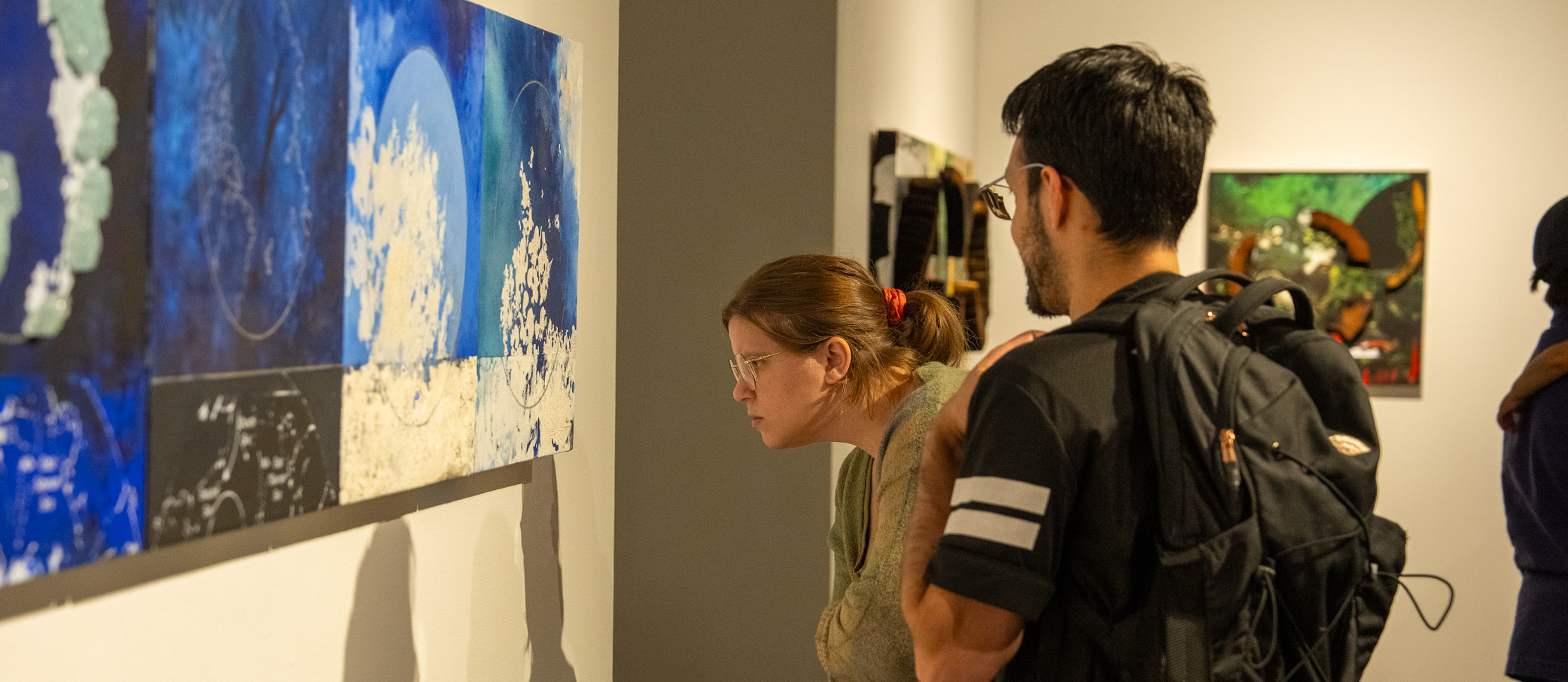
Pulling from scientific drawings and maps provided by the research team, artist Diane Burko has depicted in her paintings the chemical changes and flow of elements recorded in the Arctic. Rendered as markings and data-like graphs, these flows circulate within and around recurring spherical forms that anchor the paintings. The compositions feel distant and restrained, their cool detachment echoing the region’s vast isolation, yet they remain quietly captivating, amplifying the Arctic’s environmental extremities.
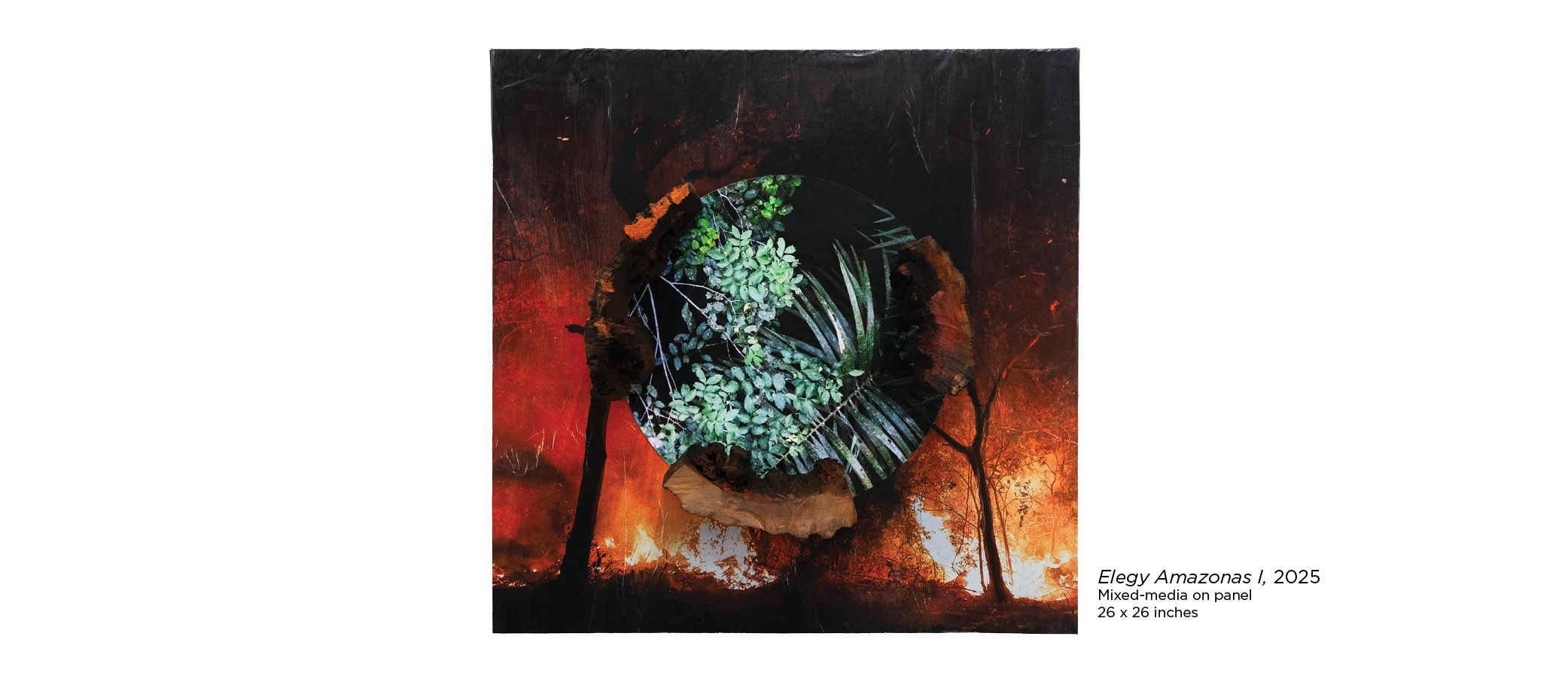
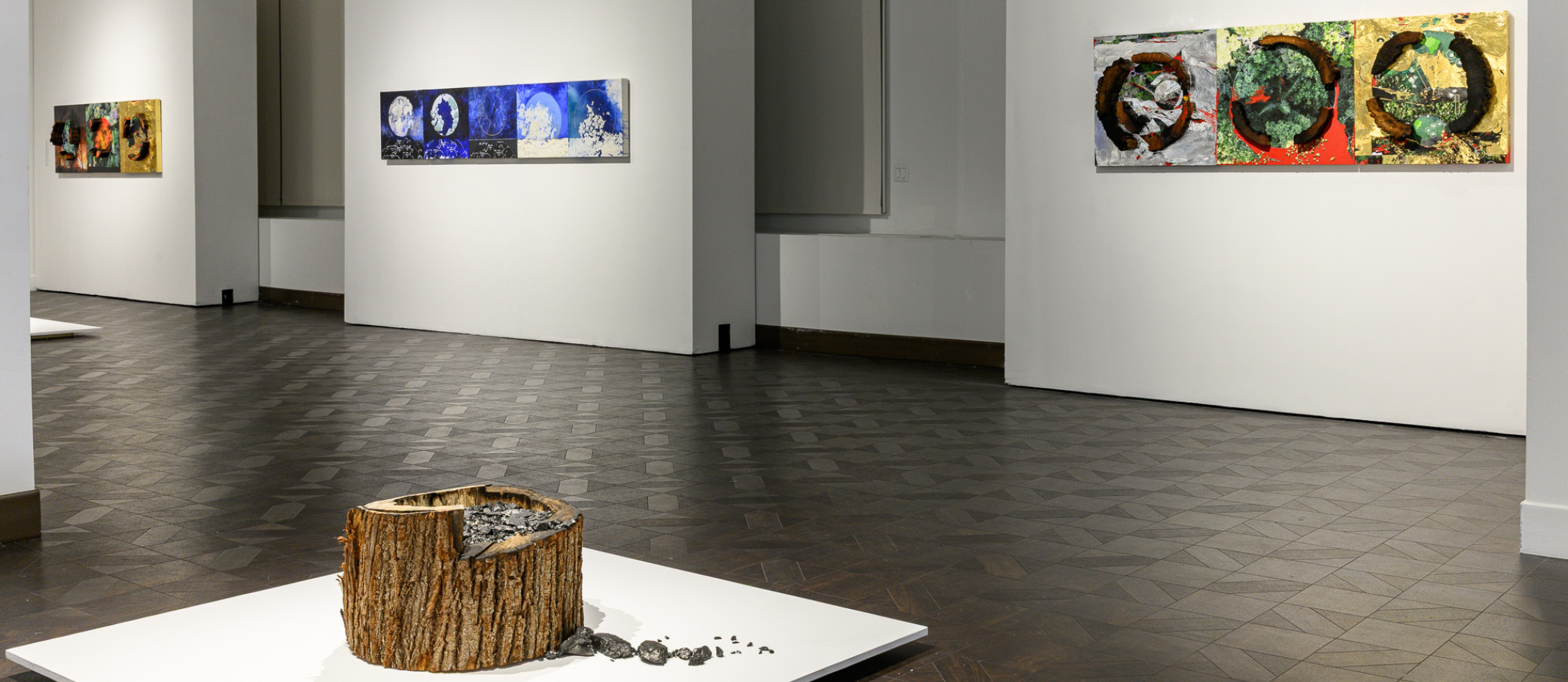
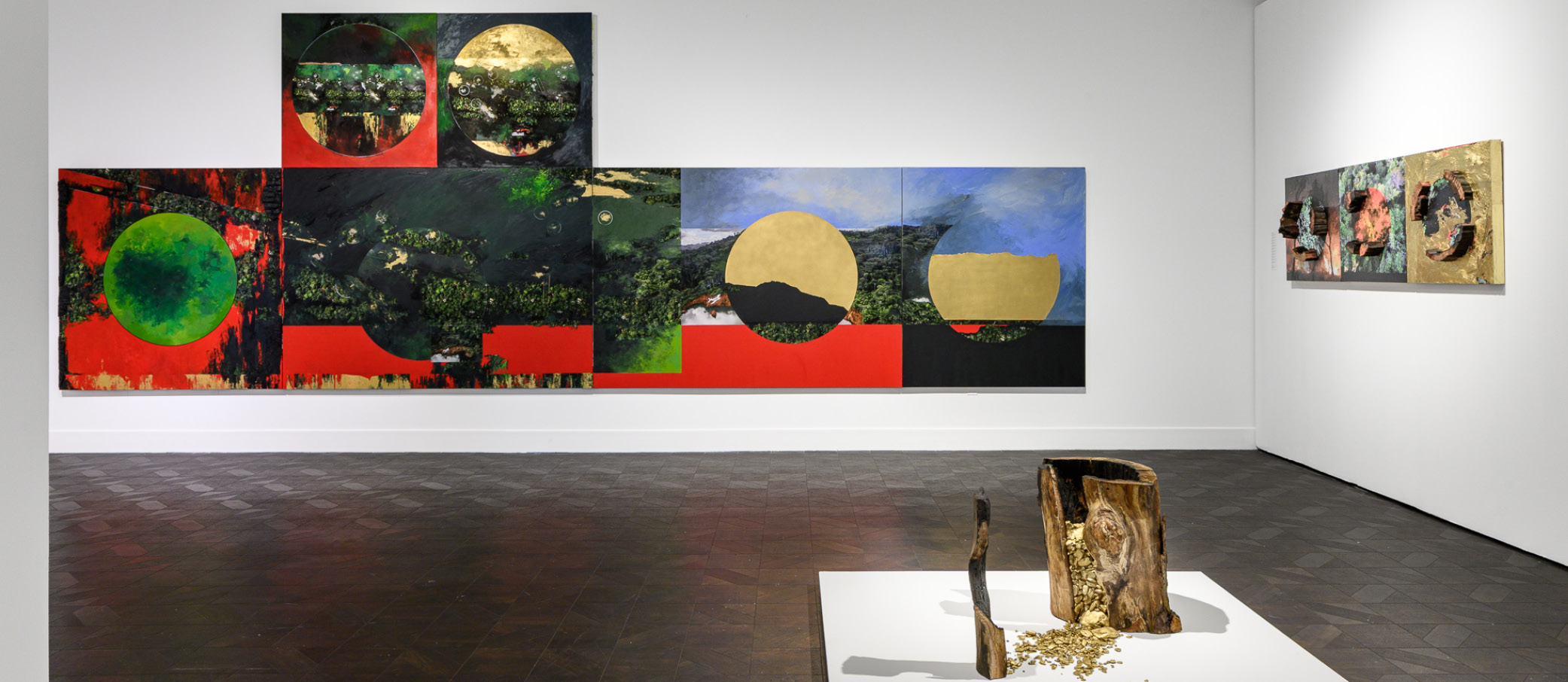
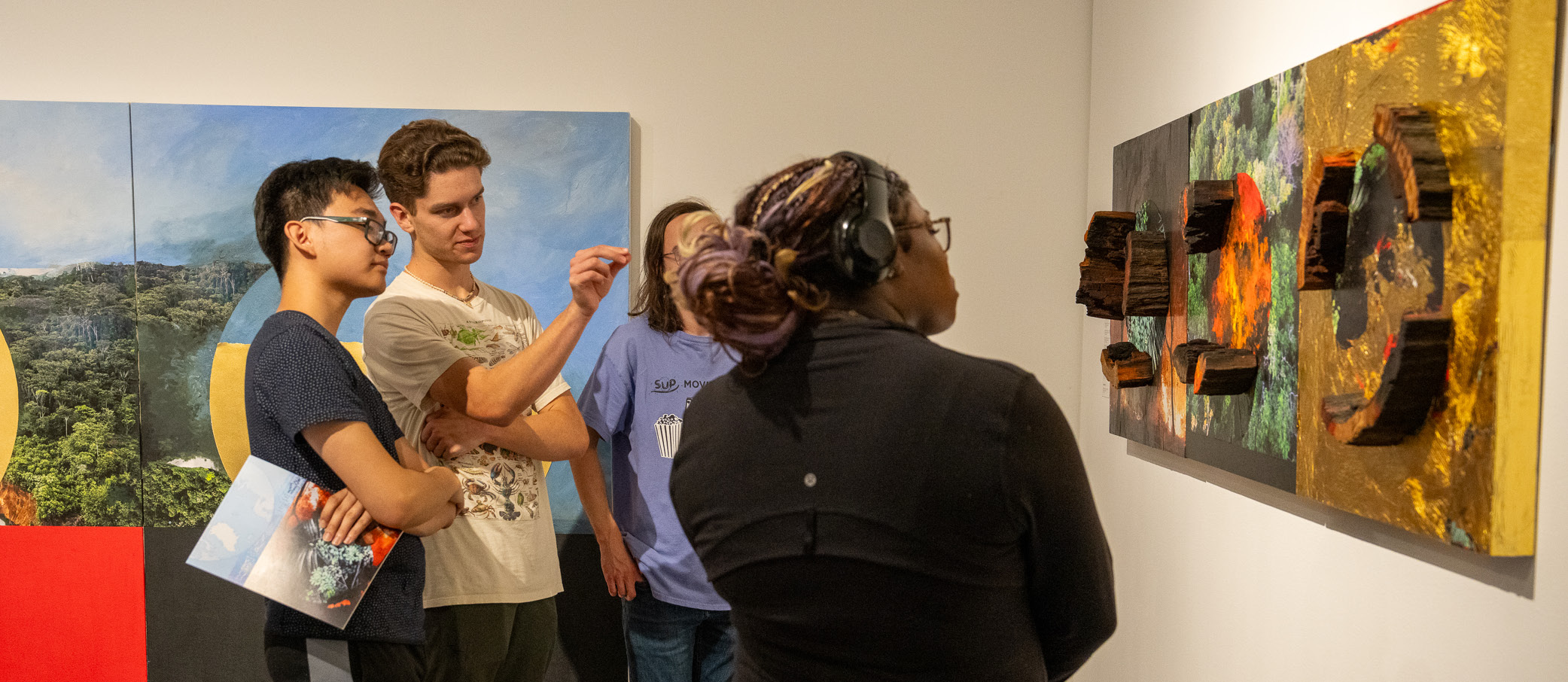
In contrast, a second body of work responds to the corporate mining industry and deforestation of the Amazon rainforest. Here, the sphere reappears, interchanging perspectives by encasing sites of extraction, or amplifying the indigenous areas that have been impacted. Fragments of charred bark protrude from the surface of these paintings, focusing attention on these locations as if viewed under a microscope. Unlike the Arctic works, these paintings are intimate but foreboding and unavoidably dominant.
The tension between these two bodies of work is striking, yet both operate within a shared framework of "extraction." One extracts scientific data that may offer pathways toward understanding climate change; the other depicts the extraction of natural resources that accelerate their distruction. The recurring spherical form visually binds these extremes, its framing device alternately magnifying or eclipsing each narrative depending on perspective and point of view.
A third series in the exhibition are 3-dimensional pieces that fuse these polarities into a single, contained spherical form. Acting as a bridge and point of convergence, it proposes a tentative resolution, with nature emerging as the ultimate agent of recovery.
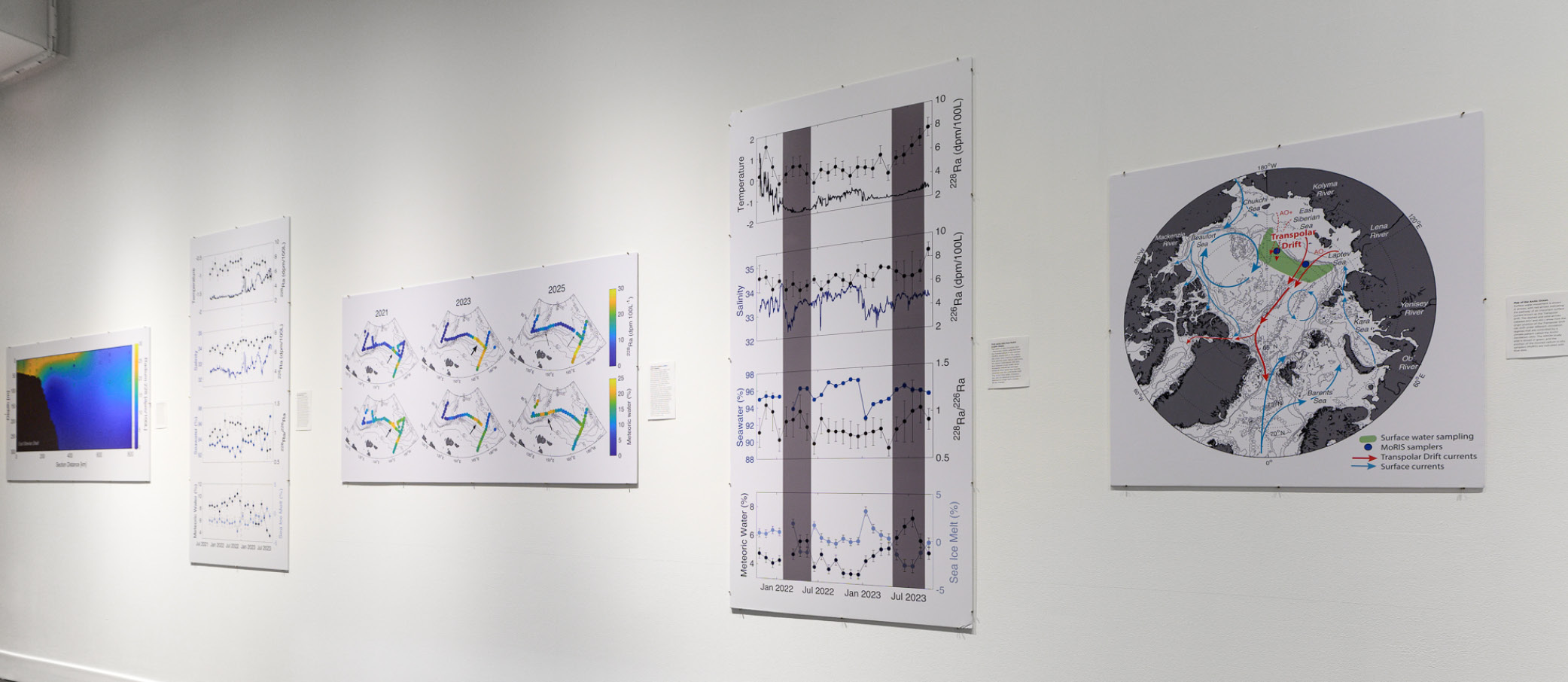
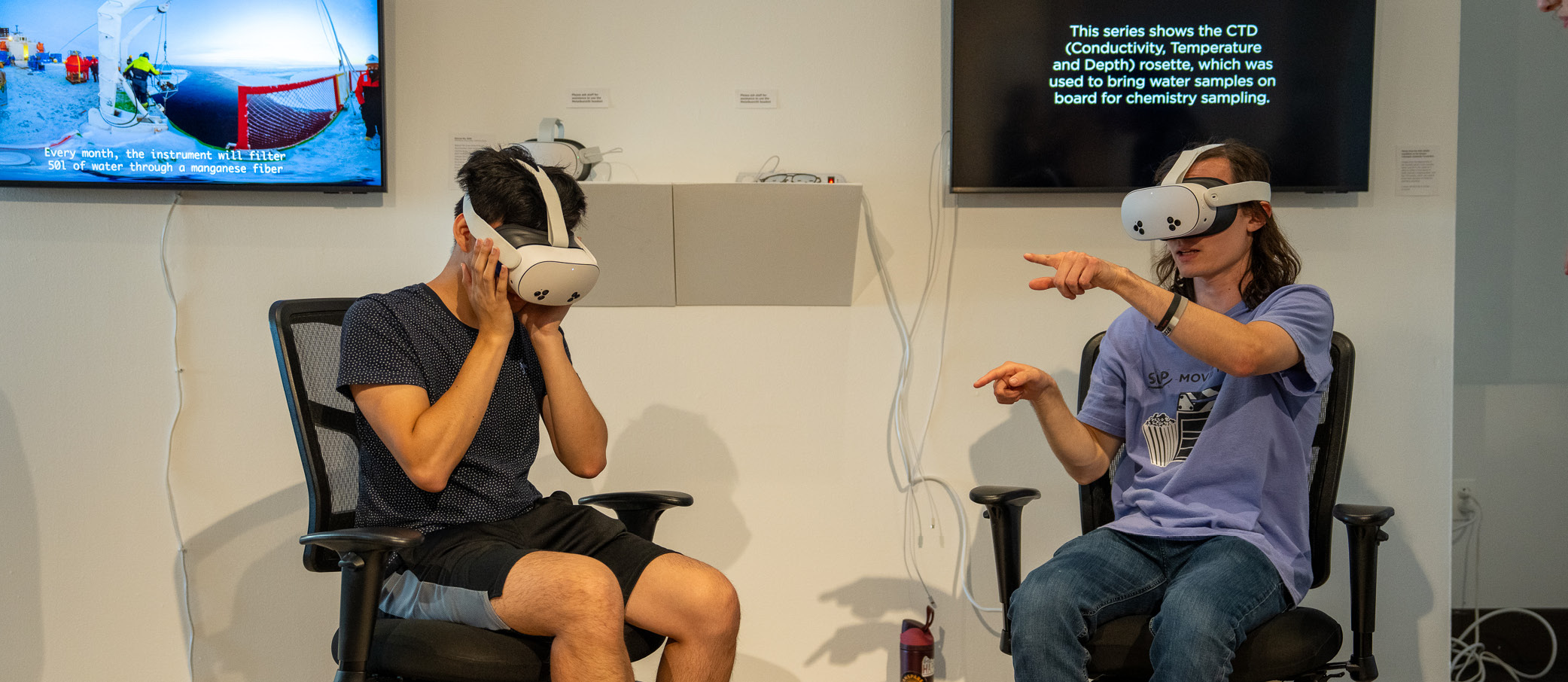
To amplify the dialog around the intersection of art and science the exhibition includes photographs from the research expedition and scientific drawings produced from the data by the environmental science students. A VR video produced by videographer Amy Lauren provides an immersive experience of the Arctic expedition.
This exhibition was made possible in part with funding from the New Jersey State Council of the Arts with additional support from the National Science Foundation, Rowan University School of Earth and Environment, and Cristin Tierney Gallery, NYC.
Let's Have a Renaissance, A converstaion with Diane Burko, presented by Mary Salvante, The Datekeepers
Diane Burko: Extraction A Dialogue of Extremes at Rowan, Art Spiel
Art As a Scientific Vehicle: Diane Burko at Rowan University Museum of Contemporary Art, Jersey Arts
Rowan University MCA presents Diane Burko environmental exhibition, ArtDaily
Exhibition highlights Rowan research on warming Arctic, Rowan Today
Intersections of Art and Science: Communication and Collaboration panel
Artist's Statement
"What drives my environmentally focused practice is “curiosity”- the need to learn more. My research begins remotely, then on site as I “bear witness” to an actual place for a more experiential encounter, as well as collaborating with scientists to further enrich my understanding.
I then return to my studio, where, if lucky – the magic begins...
For the last five years, I have been investigating rainforests and their importance to the health of our climate worldwide. I’ve been particularly focused on all the illegal extraction of gold and silver happening throughout the Amazon. A great deal of that plunder occurs illegally on indigenous lands. Here the livelihoods of its inhabitants are destroyed by the poisoning of the waters through the mining process of depositing mercury. The illegal plunderers leave behind barren land, unfishable water, and communities devastated.
For the past five years scientists at Rowan and Woods Hole have also been conducting investigations. Their research is about the importance of tracing isotopes buried in the North Siberian Seas to learn about how changes in their paths can indicate climate concerns. They have been assessing, measuring and calculating data. Unlike the pillagers in Brazil, they are extracting information to contribute to the well-being of our planet.
My challenge with the Amazon series is to find a way to express the urgency to save what’s left of Brazil’s forest that accounts for over 40% of global primary forest loss in recent years. Amazon Watch warns that Amazonia is at a tipping point crisis. My goal is to seduce the viewer emotionally through beauty and somehow incorporate the crucial facts as well.
The Secret Airstrip paintings in this exhibition exemplify my efforts to speak visually about the intruders’ invasion of private indigenous property, and their mining of gold. In this case, by illegally building airstrips in the jungle. The circular form permeates a great deal of my work and of mine in these paintings the small circles represent indigenous areas that have been illegally invaded. Another hallmark of my Amazon series is the use of burnt wood and charcoal fragments integrated into some of the smaller studies. The wood is gathered from our property in Bucks County, which led me to experiments with sliced wood hollows as well as whole ones - another attempt of materiality alluding to nature’s elements.
Returning to glacial issues in relation to the ARION study has been very gratifying since that is where I began my serious climate change investigations. My first experience walking on an actual glacier occurred in the same vicinity of the Arctic Circle in Svalbard, just south of the Siberian Sea, where the project took place.
For these NSF works, I’m concerned with transforming their data into the realm of visual excitement. Maybe even curiosity. There’s no way my artwork can explain the complicated five-year study of measuring the release of isotopes. Thus, I felt free to be as abstract as I liked in creating these pieces.
The scientists are extracting data and information to understand how our world works in the hope of improving life. Their extraction of information is so opposite the extractive activity of pilfering the Amazon Rainforests – where the goal is profit and greed with no concern for the livelihoods of indigenous populations or the future health of our planet."
Diane Burko, June, 2026
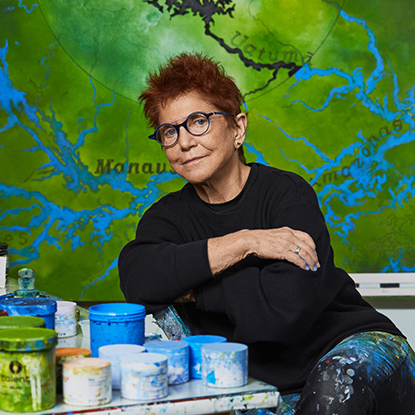
Diane Burko’s work in painting, photography, and time-based media considers the marks that human conversations make on the landscape. A Professor Emerita of the Community College of Philadelphia with additional teaching experience at Princeton University, Burko has received multiple grants from the NEA, the Pennsylvania Arts Council, the Leeway Foundation and the Independence Foundation. She has received a Lifetime Achievement Award from the Women’s Caucus for Art.
After focusing for several decades on monumental geological formations and waterways through landscape painting, Burko has shifted in the past 20 years to analyze the impact of industrial and colonial activity on those same landscapes. Burko’s practice seeks to visually emulsify interconnected subjects– extraction, deforestation, extinction, environmental justice, indigenous genocide, ecological degradation, climate collapse– so viewers might feel their connection viscerally through the beauty of her work. While her work deals with impending climate catastrophe, rather than lingering in dystopia, it celebrates the sublimity of the landscape by honoring the intricate geological and political webs that shape the identity of a place.
Burko has exhibited extensively nationally and internationally, including shows at London’s Royal Academy of Art, Madrid’s Circulo de Bellas Artes, Minneapolis Art Institute, National Academy of Sciences, Phillips Collection, RISD Museum Tang Museum, Wesleyan University Center for the Arts. She has been awarded residencies in Giverny, Bellagio, the Arctic Circle, and the Amazon Rainforest, and her work is in the collections of such institutions as the Metropolitan Museum of Art in NYC, the Minneapolis Art Institute, National Academy of Sciences, Phillips Collection, Tang Museum of Art, the V&A in London, and Rowan University Museum of Contemporary Art. She is represented by the Cristin Tierney Gallery in NYC.
After focusing for several decades on monumental geological formations and waterways through landscape painting, Burko has shifted in the past 20 years to analyze the impact of industrial and colonial activity on those same landscapes. Burko’s practice seeks to visually emulsify interconnected subjects– extraction, deforestation, extinction, environmental justice, indigenous genocide, ecological degradation, climate collapse– so viewers might feel their connection viscerally through the beauty of her work. While her work deals with impending climate catastrophe, rather than lingering in dystopia, it celebrates the sublimity of the landscape by honoring the intricate geological and political webs that shape the identity of a place.
Burko has exhibited extensively nationally and internationally, including shows at London’s Royal Academy of Art, Madrid’s Circulo de Bellas Artes, Minneapolis Art Institute, National Academy of Sciences, Phillips Collection, RISD Museum Tang Museum, Wesleyan University Center for the Arts. She has been awarded residencies in Giverny, Bellagio, the Arctic Circle, and the Amazon Rainforest, and her work is in the collections of such institutions as the Metropolitan Museum of Art in NYC, the Minneapolis Art Institute, National Academy of Sciences, Phillips Collection, Tang Museum of Art, the V&A in London, and Rowan University Museum of Contemporary Art. She is represented by the Cristin Tierney Gallery in NYC.
About the Scientific Research
The Arctic is one of the most rapidly warming regions on Earth. Climate change is reducing ice cover, increasing river discharge, and thawing permafrost. These processes are shifting the chemistry of the shallow seas that comprise over half the area of the Arctic Ocean, and changing the composition of seawater that is transported across the Arctic in a major surface current known as the Transpolar Drift.
The Arctic Radium Isotope Observing Network (ARION) established a monitoring program using radium isotopes to detect and understand climate-driven changes in Arctic surface water chemistry. Radium isotopes are naturally produced in the sediments found on the seafloor and along coastlines, and they are added to seawater when it comes into contact with these sources. Other elements, including nutrients that support organisms at the base of the food chain, are sourced from seafloor sediments similar to radium- radium therefore acts as a proxy for these other elements, so changes we see in radium levels indicate a larger scale shift in overall Arctic surface water chemistry. We hypothesize that the transport of elements- including radium- from seafloor sediments into seawater has increased due to the loss of ice cover in the Arctic, because the loss of ice at the surface allows for stronger waves and more mixing of the water.
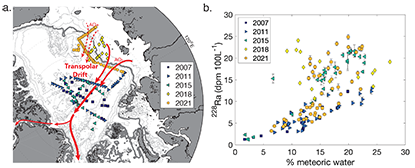
ARION focuses on measuring water chemistry at the edges of the Laptev and East Siberian Seas north of Russia, because this is where the Transpolar Drift originates. These seas are some of the largest in the Arctic and have experienced dramatic ice loss. Our research has shown that this region is particularly important in controlling Arctic surface water chemistry, highlighting the need for continued monitoring. Comparing the results of the expeditions that took place in 2021 and 2023 shows that there was indeed an increase in the levels of radium being transported in the Transpolar Drift. However, the measurements made in 2025 show a dramatic change: the position of the Transpolar Drift has shifted westward, and radium levels are lower. This shows that interannual changes in circulation are an important influence on the surface water chemistry. Additional research is needed to help detangle these interannual shifts from longer-term climate-driven changes.
Dr. Lauren Kipp
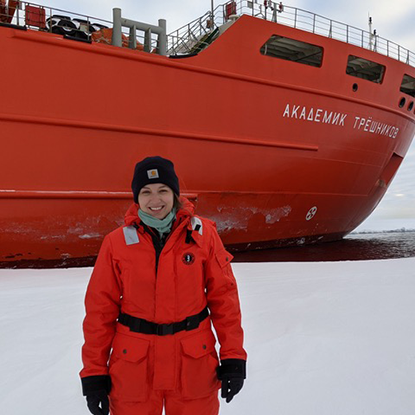
Dr. Lauren Kipp is an oceanographer and Associate Professor in the Department of Environmental Science at Rowan University. She uses naturally occurring radioactive isotopes to study the chemistry of the ocean, with a particular interest in how the oceans influence, and are influenced by, climate change. Much of her research takes place in the Arctic, where she has spent time collecting samples from the coast of Northern Canada all the way to the North Pole. She has a B.S. in Chemistry from the University of North Carolina Wilmington and a Ph.D. in Chemical Oceanography from the Massachusetts Institute of Technology - Woods Hole Oceanographic Institution Joint Program. Prior to starting at Rowan, she was a postdoctoral fellow at Dalhousie University in Halifax, Nova Scotia, and at the Lamont-Doherty Earth Observatory of Columbia University.
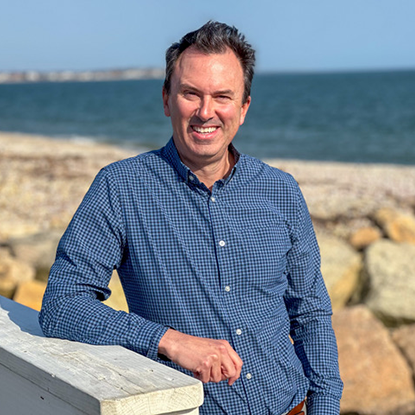
Dr. Matt Charette was named Interim Director of the Marine Policy Center at the Woods Hole Oceanographic Institution (WHOI) in 2025 and has been the Director of WHOI Sea Grant since 2017. He is also a Senior Scientist in the Department of Marine Chemistry and Geochemistry. He received his B.S. in Chemical Oceanography from the Florida Institute of Technology and his Ph.D. from the University of Rhode Island Graduate School of Oceanography. His research uses naturally occurring isotopes to study ocean processes, including submarine groundwater discharge, coastal biogeochemistry, and the movement of freshwater and chemical tracers in the Arctic Ocean. Through projects such as ARION, he is advancing our understanding of how the rapidly changing Arctic influences ocean circulation, ecosystems, and global climate.
About the VR Film
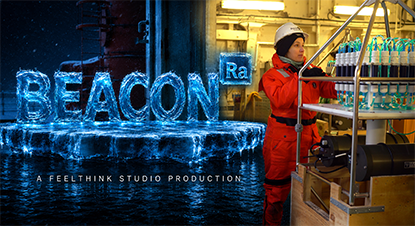
Beacon RA is an immersive VR documentary that journeys into the Central Arctic Ocean aboard the 2021 NABOS expedition, following isotope geochemist Dr. Lauren Kipp as she traces invisible signals to uncover how a rapidly warming Arctic is reshaping ocean chemistry.
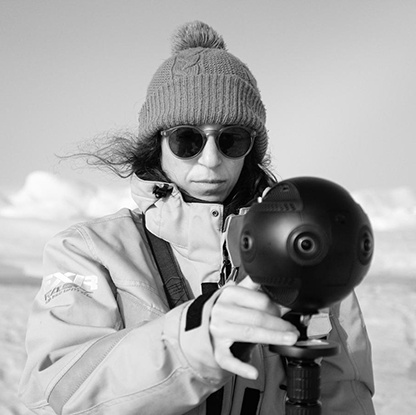
Amy Lauren is a filmmaker working at the nexus between research, education and artistic practice. Turned-toward immersive storytelling and new modes of documentary experience, Lauren builds cinematic systems that allow audiences to experience scientific reasoning perceptually rather than propositionally. She is a co-founder of Alaska Science Stories, an educational program that creates space for shared research and learning experiences by bringing Alaskans into the world of scientific fieldwork with virtual reality, and FeelThink, a creative studio designing experiences around curiosity, participation, and perceptual discovery. Lauren is a graduate of the Interdisciplinary Documentary Media Practices MFA program at the University of Colorado Boulder. Her work has screened internationally at festivals, planetariums, museums and other venues around the world.


