Eco-Social Realism
Eco-Social Realism
Eco-Social Realism
November 2 - December 19, 202
RUMOCA at 301 High Street
Curated by Daniel Tucker
Featured Artists include: Paper Buck, Carolina Caycedo, Federico Cuatlacuatl, Alicia Grullon, Aislinn Pentecost Farren and Karyn Olivier.
Opening Reception November 5th, 5:00 - 7:00 PM
Eco-Social Realism begins with a pressing question: if climate change is also a crisis of imagination, as Amitav Ghosh has suggested, what role can artists and media makers play in helping us see, feel, and politically inhabit the bioregions we already occupy? (Ghosh, 2016)
The artwork on view here presents narratives of real places in Mexico, Colombia and the United States as well as images and visual culture that challenge those territorial scales and constraints. Play, beauty, and fantasy are used to subvert topics that might otherwise be difficult to enter into, while deep explorations of material culture and language offer their own points of entry.
Eco-Social Realism brings together artworks by past participants in the Eco-Social Series that show an increased interest in infrastructural and bioregional practices that can visualize and embody the territorial scale of both problems and solutions related to the climate crisis.
Rowan University Museum of Contemporary Art is part of a regional exhibition series that grows out of the ongoing Eco-Social Series which has been co-sponsored by RAIR, Green Sun and Making Worlds books since 2023. The exhibitions are taking place in multiple sites throughout the region in Fall 2026, including Cantor Fitzgerald Gallery at Haverford College, Street Road Artists Space, TILT Institute, Big Ramp and several spaces hosting public programs including Haverford's VCAM Lounge, The Watershed, Ulises and Facing Bench.
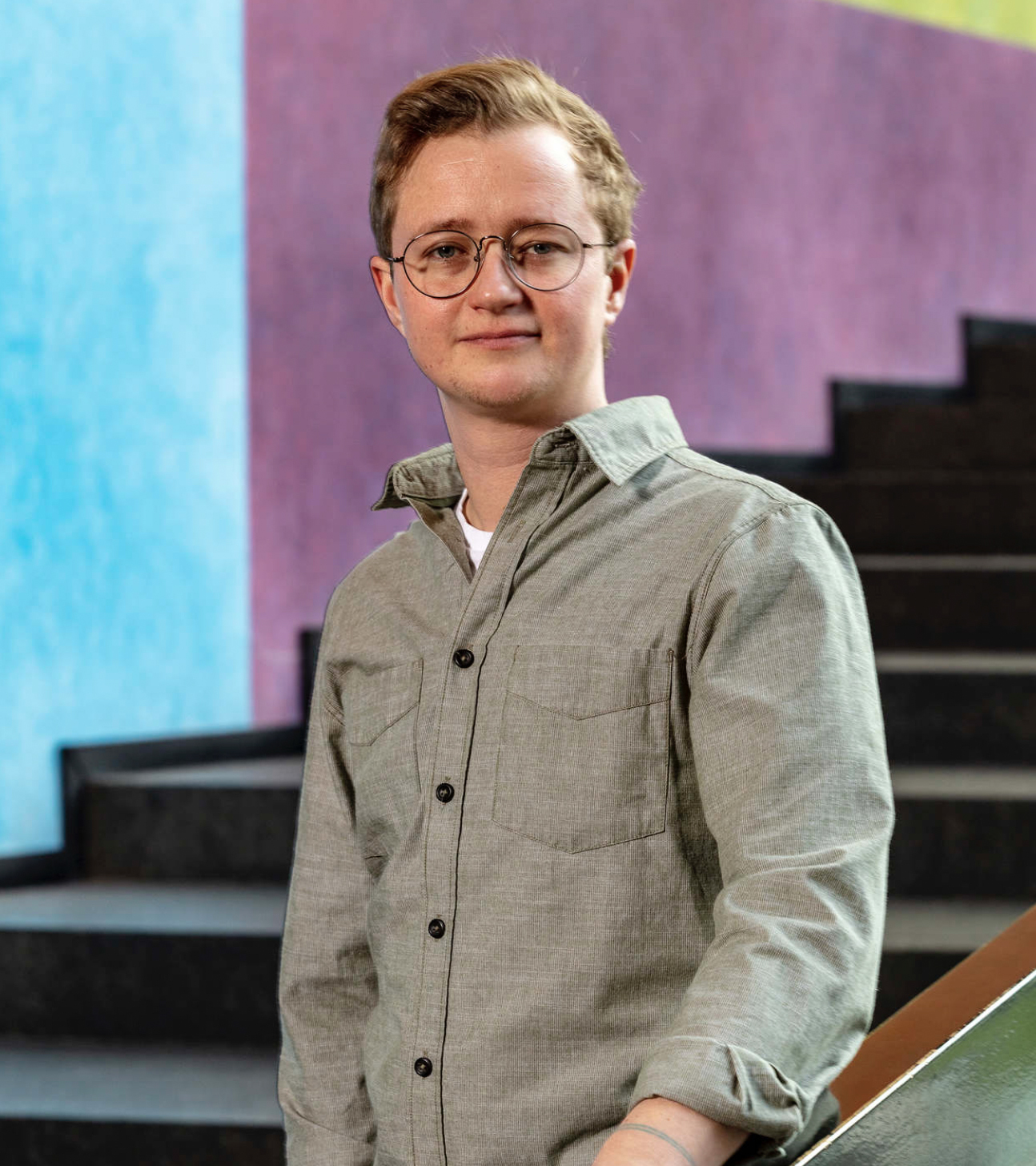
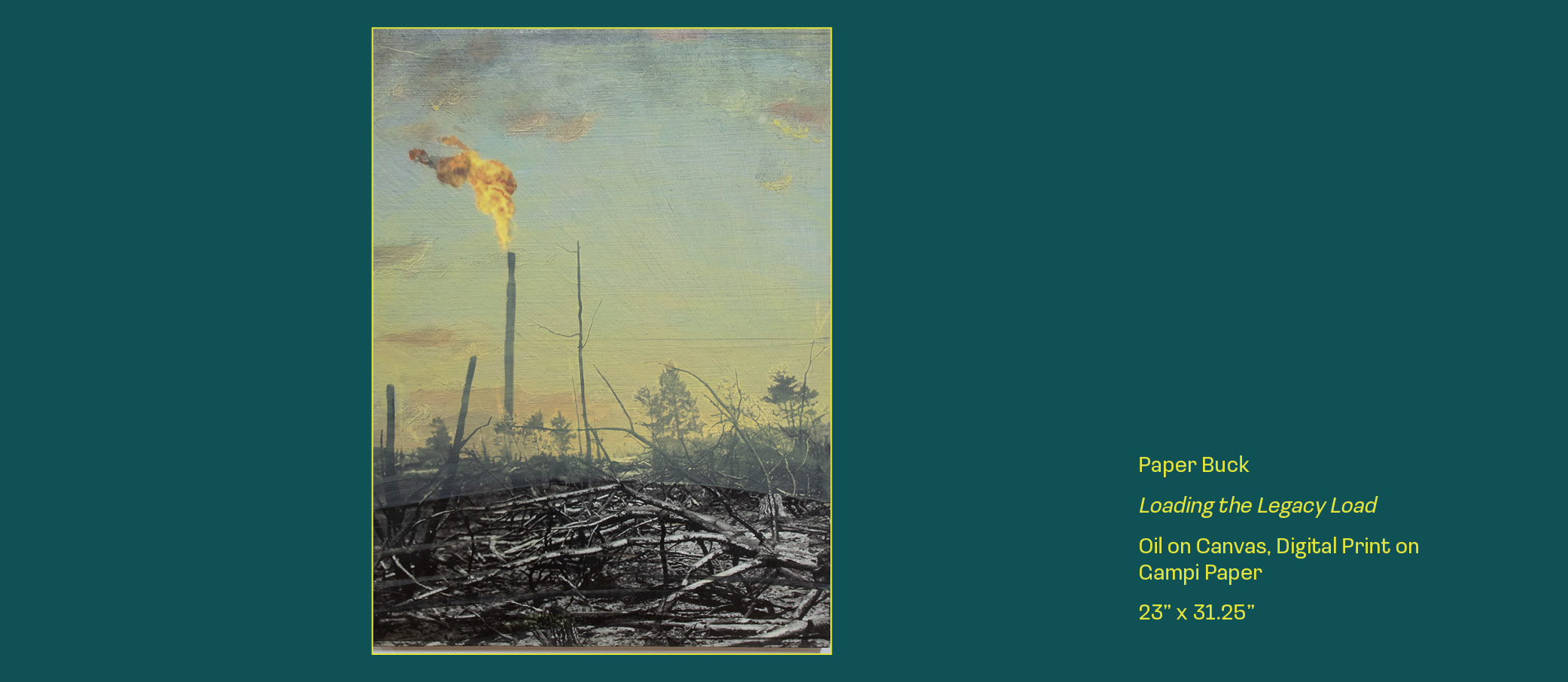
Paper Buck is a visual artist whose work critically explores white settler constructions of conservation, ecology, and the "American Landscape." His practice uses place-centered archival research, field studies, and social collaboration, to ask how lesser-known social histories remain materially embedded in present ecologies and cultural landscapes. His work spans varied disciplines, including printmaking, painting, woodworking, installation and writing.
Artist’s Statement
Amnesia with a Vista is a series of mixed-media paintings that explore contradiction, projection, and perpetuity in white settler myths and social constructions of the “American” landscape. Amnesia—a total or partial loss of memory— is actively sown, on stolen land, through intertwined social and ecological practices of disturbed interrelationship and exploitation, across generations, and genealogies of thought. The works reframe colonial land maps and historical documentation of industrial clearcutting found in archives within the artist’s hometown, alongside references to contemporary natural gas development and the work of the Hudson River School painter, Thomas Cole.
"These works grow out of research that was initially focused on the lifecycle of a particular forest I grew up beside in southern New England. Across the nineteenth and twentieth century, the Cathedral Pines, of Cornwall, CT, were socially constructed as an old growth forest, and proclaimed a national natural landmark. A 1989 tornado, however, decimated the stand, and ecologists revealed that the forest had, in fact, regrown from an early colonial clearcut. I worked with a small historical society in my hometown to build a visual archive of historic land use practices of clearcutting and charcoal production within the Muhheakunnuk/Hudson and Housatonic River valleys. As this research grew, I began to juxtapose these visual archives with the contemporaneous landscape depictions produced by the Hudson River School painter, Thomas Cole, who is often touted as a forefather of contemporary environmentalism, within white intellectual genealogies.
Cole hoped his sublime depictions of the landscape would convince settler society to protect it. Instead, his work was appropriated and mass reproduced on an industrial scale, as symbolic fodder of affirmation for a white nationalist culture of manifest destiny. Cole embedded stumps in the foreground of many of his works to signify his critical stance on the transformation of the land. But the elites and publics who consumed his work did not blink at the stumps. He moved further and further out of the Muhheakunnuk, as it was cleared, and industrialized— in order to capture the depictions he wished for."
Artist’s Statement
Amnesia with a Vista is a series of mixed-media paintings that explore contradiction, projection, and perpetuity in white settler myths and social constructions of the “American” landscape. Amnesia—a total or partial loss of memory— is actively sown, on stolen land, through intertwined social and ecological practices of disturbed interrelationship and exploitation, across generations, and genealogies of thought. The works reframe colonial land maps and historical documentation of industrial clearcutting found in archives within the artist’s hometown, alongside references to contemporary natural gas development and the work of the Hudson River School painter, Thomas Cole.
"These works grow out of research that was initially focused on the lifecycle of a particular forest I grew up beside in southern New England. Across the nineteenth and twentieth century, the Cathedral Pines, of Cornwall, CT, were socially constructed as an old growth forest, and proclaimed a national natural landmark. A 1989 tornado, however, decimated the stand, and ecologists revealed that the forest had, in fact, regrown from an early colonial clearcut. I worked with a small historical society in my hometown to build a visual archive of historic land use practices of clearcutting and charcoal production within the Muhheakunnuk/Hudson and Housatonic River valleys. As this research grew, I began to juxtapose these visual archives with the contemporaneous landscape depictions produced by the Hudson River School painter, Thomas Cole, who is often touted as a forefather of contemporary environmentalism, within white intellectual genealogies.
Cole hoped his sublime depictions of the landscape would convince settler society to protect it. Instead, his work was appropriated and mass reproduced on an industrial scale, as symbolic fodder of affirmation for a white nationalist culture of manifest destiny. Cole embedded stumps in the foreground of many of his works to signify his critical stance on the transformation of the land. But the elites and publics who consumed his work did not blink at the stumps. He moved further and further out of the Muhheakunnuk, as it was cleared, and industrialized— in order to capture the depictions he wished for."
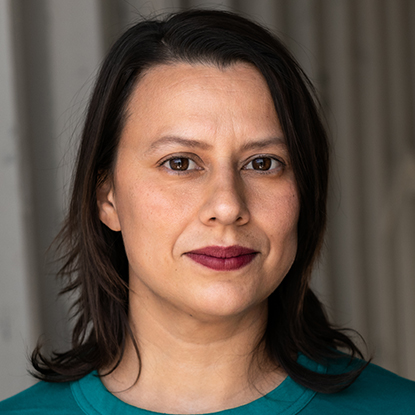
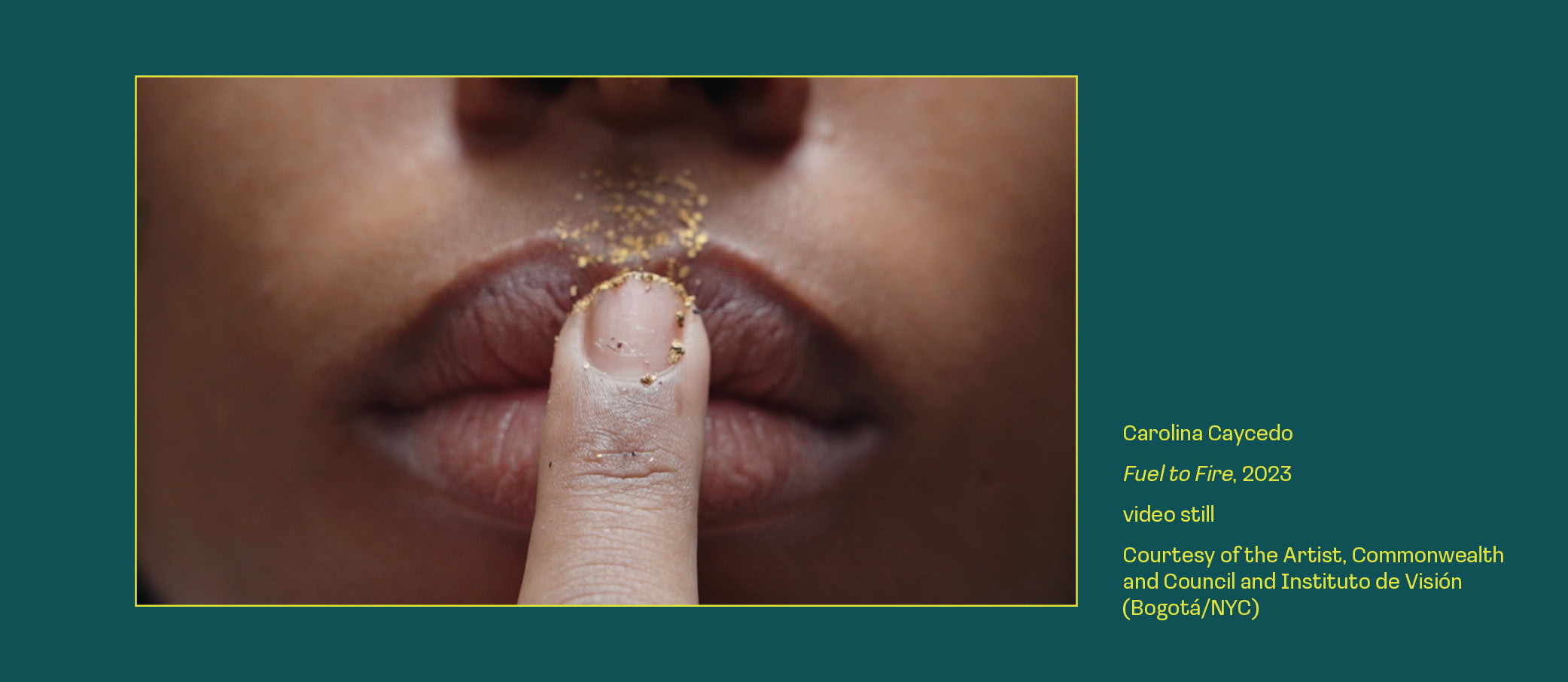
Carolina Caycedo (London, 1978) is a Colombian artist born in London and living in Los Angeles. Her murals, books, performances, films, photo-collages, hanging sculptures and installations are gateways into larger discussions about how we treat each other and the world around us. Engaging with issues of water and land stewardship, food sovereignty, and Fair Energy Transition, she inquires into ways of being on Earth that foster sustaining and caring relationships with the natural and built environments. Research and participation are central to Caycedo’s work. Through her studio practice and spiritual fieldwork with communities impacted by extractivism, she invites viewers to consider the unsustainable pace of growth under capitalism and how we might embrace resistance and solidarity. Informed by rural practices, Native Peoples, and feminist epistemologies, Caycedo contributes to the reconstruction of environmental and historical memory as a fundamental space for climate and social justice.
Artist’s Statement
Fuel to Fire is a single channel video that brings the viewer into a pagamento, or payback, of gold to a body of water. This ritual was performed for the wellbeing and conservation of the Paramo de Santurbán, a moorland ecosystem within the high mountains of North West Colombia, which holds large and sought after deposits of gold. The pagamento is an indigenous ecological and economic fundamental protocol, that maintains the flow and balance of life cycles on earth. When accumulation happens, sickness arrives, and so it's necessary to give back by letting go of something that is dear, that implies labor, or that is highly symbolic. Fuel to Fire was commissioned by Sharjah Biennial 15: Thinking Historically in the Present.
Photo by Ruben Diaz.
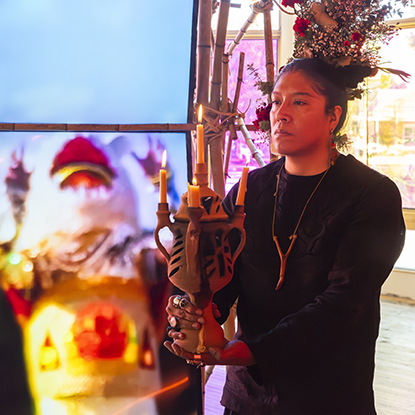
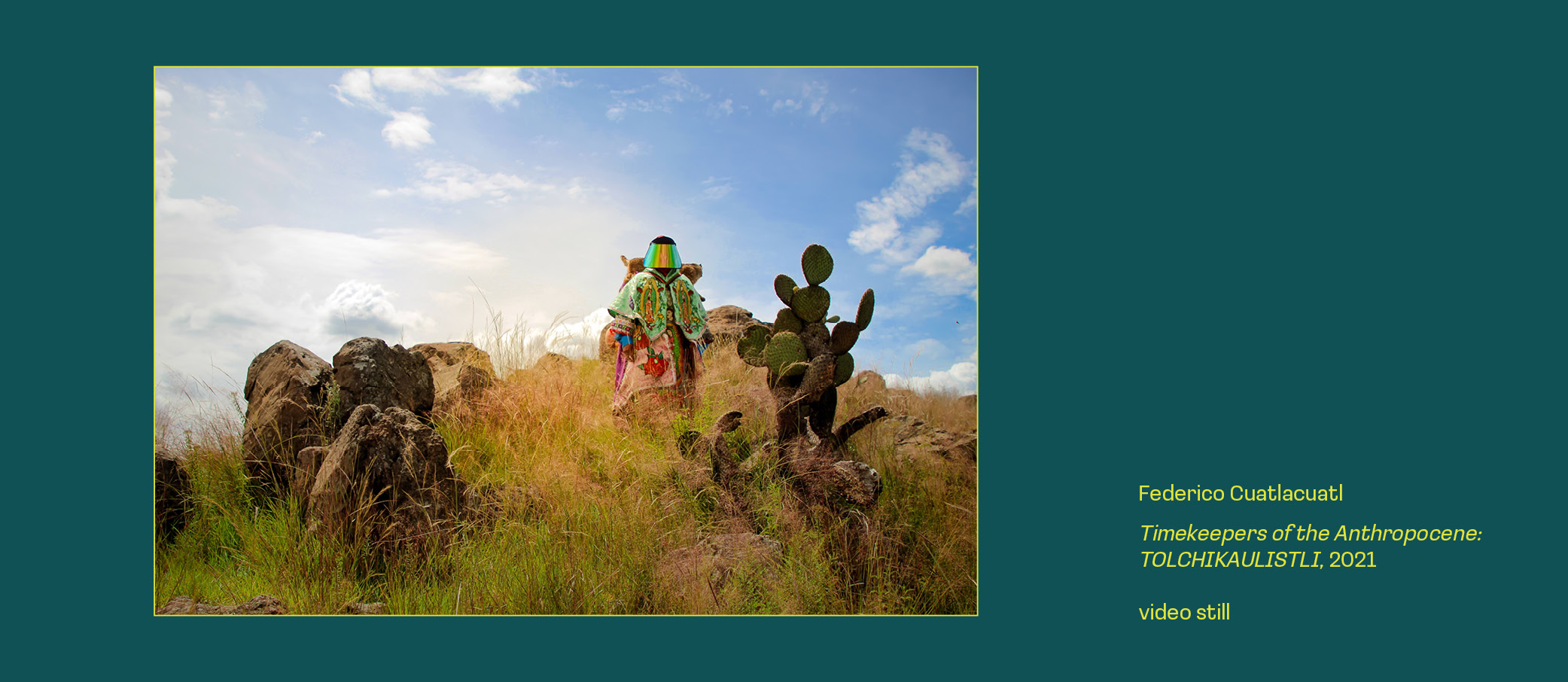
Federico Cuatlacuatl is an artist born in San Francisco Coapan, Cholula, Puebla, Mexico. Federico's work is invested in disseminating topics of Nahua indigenous immigration, social art practice, and cultural sustainability. Building from his own experience growing up as an undocumented immigrant and previously holding DACA (Deferred Action for Childhood Arrivals), Federico’s creative practice centers on the intersectionality of indigeneity and immigration under a pressing Anthropocene. At the core of his most recent research and artistic production is the intersection of transborder indigeneity, migrant indigenous diasporas, and Nahua futurisms. Federico’s independent productions have been screened in various national and international film festivals as well as exhibitions in museums and galleries worldwide. As founder and director of the Rasquache Artist Residency in Puebla, Mexico, he actively stays involved in socially engaged works and binational endeavors.
Artist’s Statement
TOLCHIKAULISTLI: To exist simultaneously in two places and dimensions of time is an immigrant’s ability to embody a transborder life, navigating the past, present, and future at once. To (be)long is to reclaim territory, in this case it is a transcendence of time and space as a means to reclaim a new dimension of territory or place that must exist in between two worlds, between the past and the future, between two identities, between ones many selves. Smuggling traditions are acts of resiliency, self-preservation, resistance, and self rematriation in a dimension of transborder indigeneity and within one’s many selves: to be an alien; to be the other; to be the threat; to be the dream; to be the backbone; to be the invasion; to be a cultural nomad; to be (in)visible; to be 500 years of historical weight; to be a ‘pinche indio’ ; to be hope…
MOCHICH XIHUICHICHIKILO: Futuristic transborder neo-Nahuales have reinvented themselves. They have re-invaded their own cosmology. We see the last glimpses of the coloniser imposed religion. A neo-Nahua atmosphere takes shape as these intergalactic Tiaxcas reclaim their land, their spirituality, their connection to the landscape. They dance and offer rituals to bless and honour the living memories of these lands. The volcano Popocatepetl becomes one with them, together they embody a timeless spirit with the land. Time traveling has allowed them to break linear notions of time, embodying the past, present, and future at once. Nahua inter-dimensional spatiality is rendered breaking barriers of time and space, defying all borders. The drumming of the teponaxtle beats to the rhythm of their ongoing journey.
Artist’s Statement
TOLCHIKAULISTLI: To exist simultaneously in two places and dimensions of time is an immigrant’s ability to embody a transborder life, navigating the past, present, and future at once. To (be)long is to reclaim territory, in this case it is a transcendence of time and space as a means to reclaim a new dimension of territory or place that must exist in between two worlds, between the past and the future, between two identities, between ones many selves. Smuggling traditions are acts of resiliency, self-preservation, resistance, and self rematriation in a dimension of transborder indigeneity and within one’s many selves: to be an alien; to be the other; to be the threat; to be the dream; to be the backbone; to be the invasion; to be a cultural nomad; to be (in)visible; to be 500 years of historical weight; to be a ‘pinche indio’ ; to be hope…
MOCHICH XIHUICHICHIKILO: Futuristic transborder neo-Nahuales have reinvented themselves. They have re-invaded their own cosmology. We see the last glimpses of the coloniser imposed religion. A neo-Nahua atmosphere takes shape as these intergalactic Tiaxcas reclaim their land, their spirituality, their connection to the landscape. They dance and offer rituals to bless and honour the living memories of these lands. The volcano Popocatepetl becomes one with them, together they embody a timeless spirit with the land. Time traveling has allowed them to break linear notions of time, embodying the past, present, and future at once. Nahua inter-dimensional spatiality is rendered breaking barriers of time and space, defying all borders. The drumming of the teponaxtle beats to the rhythm of their ongoing journey.
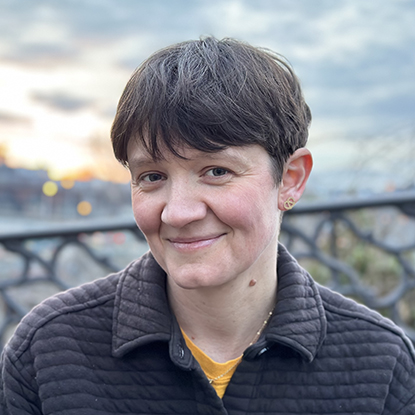
Aislinn Pentecost-Farren is an artist, curator, and public historian. She takes artifacts, collections, and landscapes as the starting point for sculpture, writing, and public interventions. Her current work locates the origins of the climate crisis in America’s cultural inheritance. Aislinn’s practice draws on fifteen years working with historic sites, museums, and parks as a curator and artist. She has led dozens of interdisciplinary projects that convene communities and publics around ecology, culture, and history. Partners include the Philadelphia Museum of Art, New Jersey State Council on the Arts, Mural Arts Philadelphia, Bartram’s Garden, and the Arts Council of Wales. Aislinn lives and works in Philadelphia, PA.
Artist’s Statement
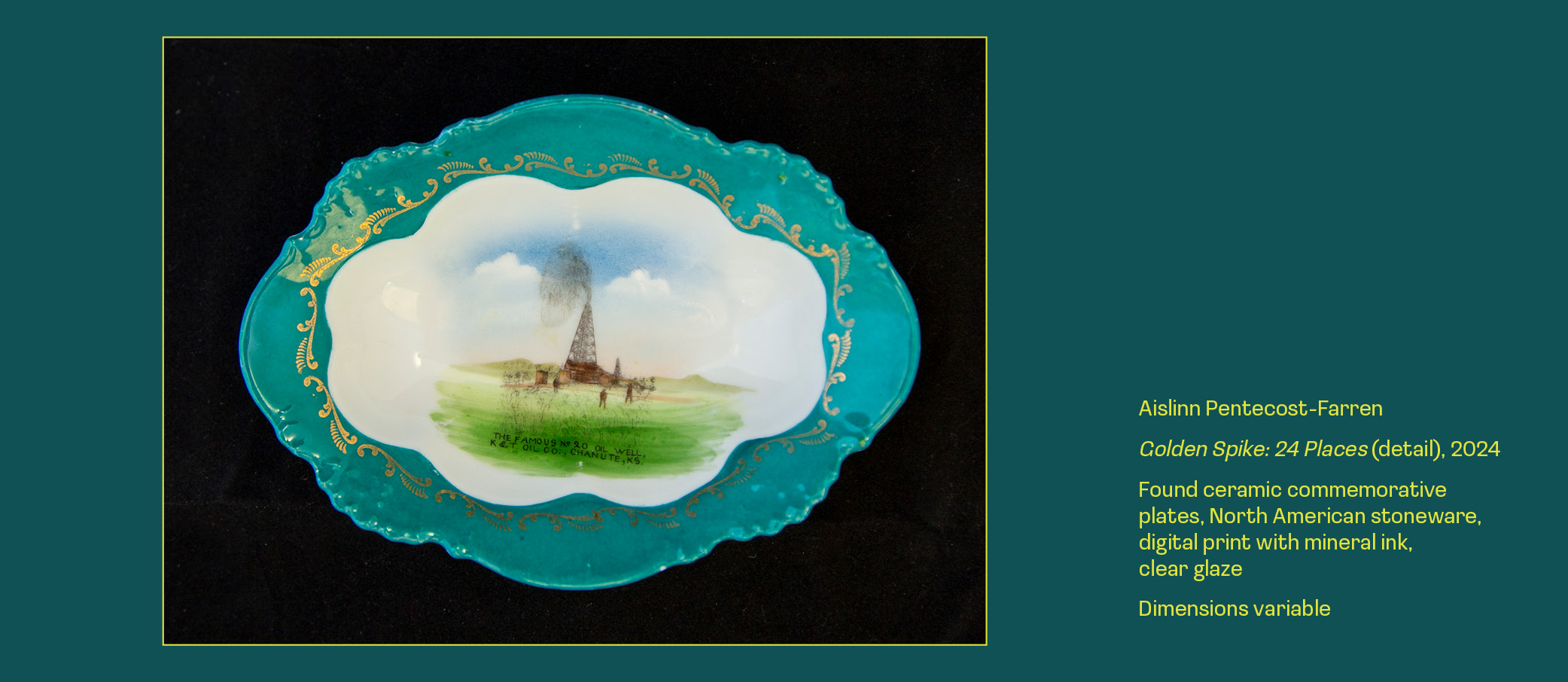
Golden Spike displays twelve 19th and 20th-century commemorative plates of industrial sites with new ceramic work commemorating the new geological era humans have created, known as the Anthropocene. Twelve cream stoneware plates represent twelve places where evidence was collected for a 2023 proposal to officially recognize that human activity has changed the geology of the earth. The title references a marker used by geologists to designate a change in era, and the name of the railroad spike that connected the two ends of the transcontinental railroad in 1869, cinching together the force of American extraction from coast to coast. Golden Spike uses Americana as a divining tool for the origins of crisis. Together, the twenty-four places in this project trace a long arc of cause and effect, pride and regret, nostalgia and contemporary catastrophe.
Artist’s Statement
Golden Spike displays twelve 19th and 20th-century commemorative plates of industrial sites with new ceramic work commemorating the new geological era humans have created, known as the Anthropocene. Twelve cream stoneware plates represent twelve places where evidence was collected for a 2023 proposal to officially recognize that human activity has changed the geology of the earth. The title references a marker used by geologists to designate a change in era, and the name of the railroad spike that connected the two ends of the transcontinental railroad in 1869, cinching together the force of American extraction from coast to coast. Golden Spike uses Americana as a divining tool for the origins of crisis. Together, the twenty-four places in this project trace a long arc of cause and effect, pride and regret, nostalgia and contemporary catastrophe.
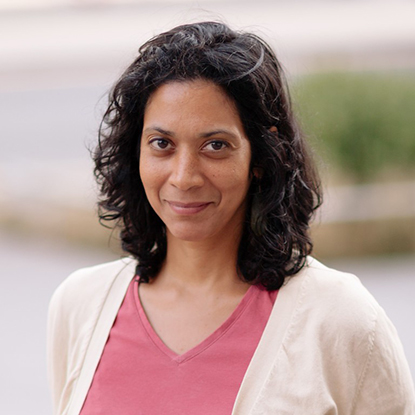
Alicia Grullón is a Bronx-based artist and organizer. Grullón’s social practice work extends to exploring how people relate to land in order to rally a transformation of our living by using performance and self-portraiture as a critique on the politics of presence, an argument for the inclusion of underinvested communities in political and social spheres. She was a Moore College of Art and Design Walentas Fellow for 2020-2022, and teaches at Queens College. Alicia Grullón has exhibited work at Wallach Art Gallery, Columbia University; Bronx Museum of the Arts; and BRIC Arts Media House, all in New York, among others. Grullón’s legislative art project Percent For Green looks at climate change from the perspective of environmental injustices in the Bronx and has created a functioning green bill with Bronx residents. This project contributed to her acting as one of the co-lead organizers in the Bronx for the People’s Climate March. Grullón’s works have been shown in numerous group exhibitions including The 8th Floor, Bronx Museum of the Arts, BRIC House for Arts and Media, School of Visual Arts, El Museo del Barrio, Columbia University, Socrates Sculpture Park, Performa 11, Old Stone House and Art in Odd Places.
Artist’s Statement
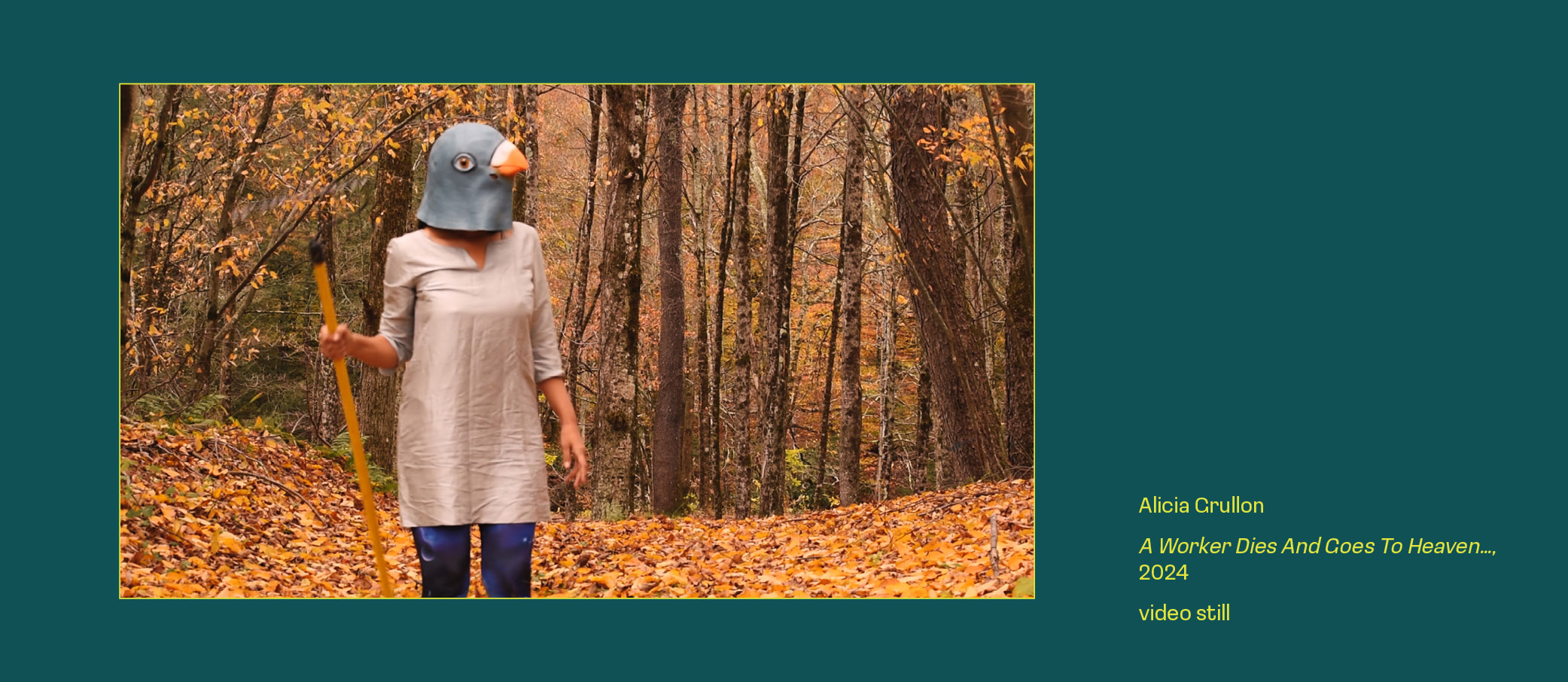
A Slow Walk with Trees is a solo exhibition and meditation on land, labor, and the intersections of personal and collective action. Spanning three bodies of work—banners, photographic works with text, and video—the exhibition centers the body as a medium of activist expression. It reflects on the entangled relationships between labor, land, and systemic inequity, asking how human work shapes both the environment and the social conditions of marginalized communities. In the video A Worker Dies and Goes to Heaven…, viewers are guided through a forest by a cast of animal characters. The title serves as a setup and prompt, offering enough information to situate the protagonist while establishing expectations about the journey that follows. Drawing from news broadcasts and oral storytelling, the audio confronts the consequences of industrial labor, revealing how sectors of the global economy continue to rely on practices and policies that exploit both people and the environment. Layered throughout the work is a compilation of texts derived from research into recent events across industries such as mining, shipping, and entertainment. The piece examines the often-hidden costs of labor while complicating conventional understandings of work, responsibility, and survival.
The banners show silkscreened text that I learned via grounding exercises used by activists before an action. The banners function as meditative guides, framing the gallery space as a site for reflection on ancestral connections, ecological systems, and technological entanglements. By borrowing the tools of activism, the banners suggest a call to action while simultaneously prompting visitors to slow down and reconsider their roles in labor, land use, and the possibility of transformation.
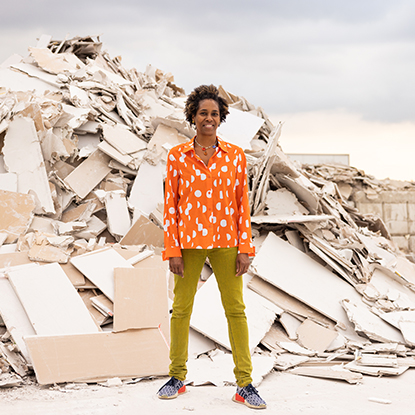
Karyn Olivier who was born in Trinidad and Tobago and raised in Brooklyn, creates sculptures, installations, and public art. Currently, Olivier is the Public Works Artist in Residence at the Free Library of Philadelphia. Recent projects include a solo exhibition at the Museum of Contemporary Art Detroit, and the unveiling of a memorial honoring Vel R. Phillips, the late politician, judge, and civil rights activist. In 2024, she participated in the Whitney Biennial (NY, NY), La Trienal at El Museo del Barrio (NY, NY), the Malta Biennale (Valleta, Malta), and Prospect.6 Triennial (New Orleans, LA). In 2024, Olivier also unveiled the Stenton House Memorial, Right Here, honoring Dinah, a formerly enslaved servant, and was commissioned to create a year-long installation at Rice University (Houston, TX). In 2023, Olivier presented her second solo show at Tanya Bonakdar Gallery and presented a solo show at Swarthmore College (Swarthmore, PA). In 2022 Olivier participated in Documenta 15 and installed a permanent commission for Newark Liberty International Airport.
Artist’s StatementKaryn Olivier’s artistic practice merges multiple histories and collective memory with present-day narratives. Through the slight manipulation of familiar objects and spaces, such as coffee tables, playground slides, or grocery stores, the artist re-contextualizes the viewer’s relationship to the ordinary. Questioning what we presume to be the function or facts of an object or space, she asks us to reconcile memory with conventional meanings, ultimately revealing contradictions as well as new possibilities and ideas. Olivier’s work often reflects on public versus private space, recalling communal nostalgias connected to social and physical experiences and how those phenomena relate to inclusivity and acceptance.
How we interact with and dissect conflicting narratives and their representation in art are core elements of Olivier’s practice. Actively engaged in reinterpreting the role of monuments, the artist has created both temporary and permanent sculptures and installations for the public. With recurring themes of absence, invisibility and displacement, often embedded in the viewing experience itself, the artist intervenes in ‘blind spots’ — unseen and unconsidered spaces — drawing attention to the periphery. Tethering the formidable and fragile, melancholy and hope, Olivier’s work echoes the tension that exists in our shifting personal and civic lives.
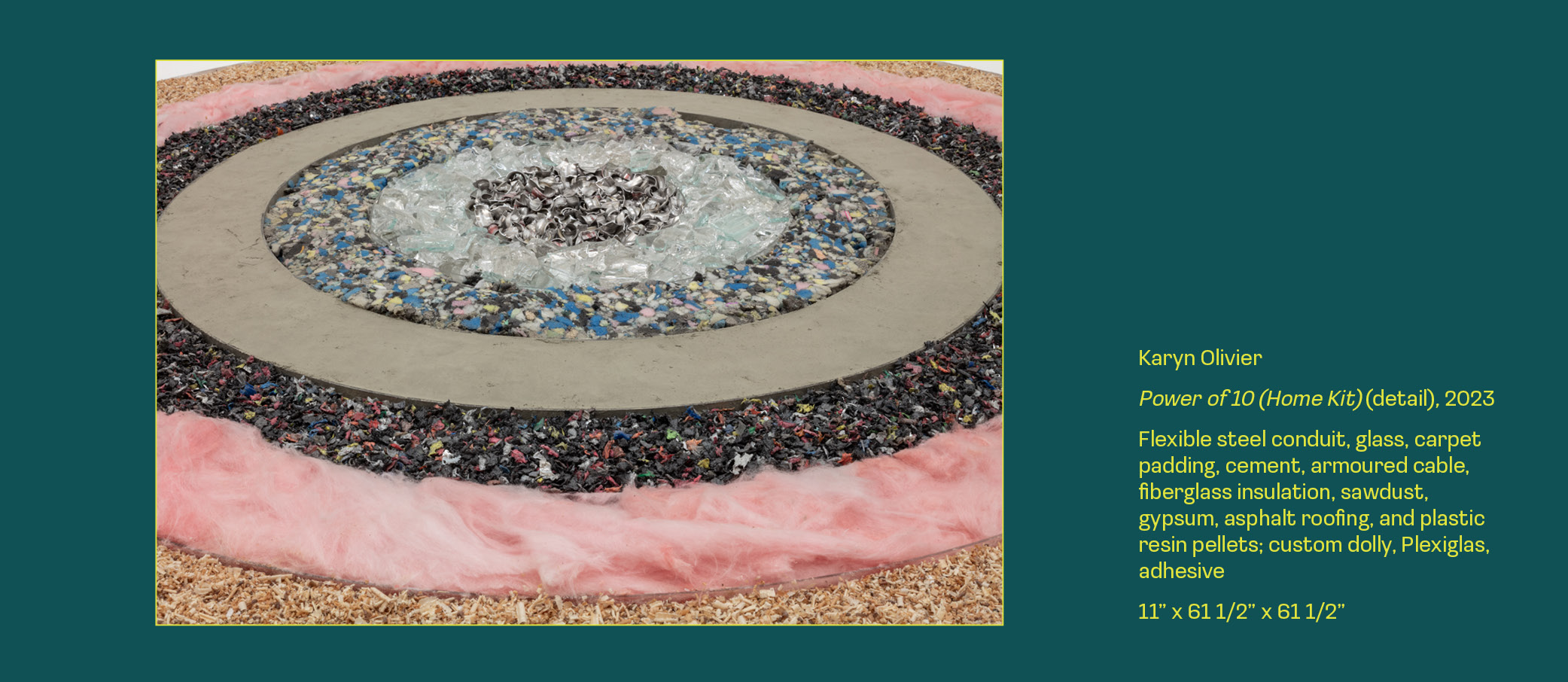
Powers of 10 (Home Kit), which references the Charles and Ray Eames film, displays the materials most frequently used in home construction in ten concentric rings. Positioned above the floor on a custom moveable dolly, the aggregate materials in this “kit” can be understood as a portal into geological time and our current epoch, the Anthropocene, which is defined by humankind’s impact on the planet.
Photo by Ryan Collerd, courtesy of The Pew Center for Arts & Heritage.


