Dr. Charlotte Heath-Kelly
Dr. Charlotte Heath-Kelly
Dr. Charlotte Heath-Kelly
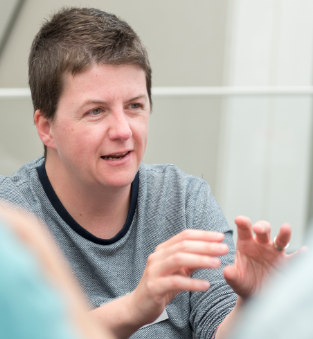
Dr. Charlotte Heath-Kelly
Professor, Political and International Studies
University of Warwick
Charlotte Heath-Kelly is a Professor of Politics and International Studies at the University of Warwick. She recently completed a 5-year study of counter-radicalization programs across 7 European countries, which demonstrated that national understandings of civil society also produce imaginations of uncivil society (the extremist). Political cultures produce an “enemy in the mirror,” then use multi-agency collaborations to identify potential extremists and remake them. Her recent book with Oxford University Press, co-authored with Sadi Shanaah, is The Politics of Preventing Violent Extremism: Liberal Democracy, Civil Society and Countering Radicalisation. Her work has also appeared in Security Dialogue, International Political Sociology, European Journal of International Security, and many other academic journals.
Interviewer: Mikkel Dack, RCHGHR/History
Can you begin by telling me a bit about yourself—professional background, institutional affiliations, research interests?
I’m a Professor at the University of Warwick in the UK, studying counterterrorism programs in Europe – but I’ve also worked on memorialization trends in the twenty-first century (how war memorialization transitioned, architecturally, to commemorate acts of terrorism). International Relations is my disciplinary home, because it hosts “Critical Security Studies” – the sub-field which looks at how “security” claims work politically, to open up new avenues for political action. I’m particularly interested in how visions of the past and the future play are used in security claims. Counter-radicalization, of course, has a very distinctive use of the future – articulating that deficits and vulnerabilities in an individual’s present life can predict acts of terrorism in their future.
What were the key findings of your recently completed study of counter-radicalization practices across Europe?
We studied 7 nations’ counter-radicalization policies in Europe, but we also dug deeply into the archives of International Organizations (the UN, EU, Council of Europe and OSCE) to understand how their Preventing Violent Extremism work has developed, since 9/11. Our national case studies were balanced between neoliberal economies in Western Europe, the social democracies of the Nordics, and the post-Socialist nations of East and Central Europe. At the outset of the project, we thought that prevention policies would reflect the different welfare state models of each region – with neoliberal and social democratic welfare states producing very different approaches to pre-emptive security.
Our findings showed that, actually, national political cultures were more influential on the type of pre-emptive security that was employed. For example, Britain and France – despite sharing imperial histories and neoliberal social and economic policies – have profoundly different counter-radicalization approaches. Britain favors a highly pre-emptive, interventionist approach, which uses behavioral science to intervene in people’s lives and de-radicalize them, before any criminality develops. France, however, does not used any pre-emptive interventions. This is considered out-of-bounds because the Republic provides all its citizens with rights to freedom of speech, thought and association. France only uses de-radicalization interventions when they have been ordered by a court in response to criminal conviction. However, France simultaneously takes a very tough approach to its migrant communities through a culturalist agenda known as ‘new laïcité’, where the historic political culture of the Republic is reimagined through the policing of dress codes and religious symbols in daily life.
We found, through our 7 national case studies, that countries have distinct imaginations of what “civil society” is. These differ significantly between Western, Northern, Central and Eastern Europe. Those imaginations of civil society are very important for the type of counter-radicalization that develops, because they also inform how uncivil society is framed. Each nation’s understanding of the “extremist” was the mirror image of their picture of “civil society.” The type of counter-radicalization that develops, then, is a perfect insight into what a society fears.
In your book, The Politics of Preventing Violent Extremism, you discuss the “long history” of preventing and countering extremism. Can you summarize the concept and practice of de-radicalization prior to 9/11?
One of our key findings was that counter-extremism existed before 9/11. Most literature understands that 9/11 provoked the creation of counter-extremism, but this isn’t true. Rather, the archival documents from the OSCE (Organisation for Security and Cooperation in Europe) demonstrate that extremism was a major topic of discussion for member states in the 1990s and very early 2000s. In the month before 9/11, Russia launched a counter-extremism program called “Fostering Attitudes of Tolerance and Preventing Extremism in Russian Society.” Earlier, in June 2001, Russia, China, Kazakhstan, Uzbekistan, Tajikistan and Krygystan signed the Shanghai Convention on Combatting Terrorism, Separatism and Extremism’ – centering an idea of extremism as producing terrorist attacks. These countries have something in common: they are not liberal democracies and they do not have good records on defending human rights. Indeed, throughout the OSCE archives in the 1990s, something fascinating comes to light: the Western member states critiqued the counter-extremism efforts of the Central Asian states as abusive and snidely recommended that democratic institutions could instead prevent terrorism. Western states opposed counter-extremism! We then traced how, after 9/11, very significant discursive work was done to transform this opposition into support for a European counter-extremism agenda. This, effectively, refocused “extremism” as something that accompanied Muslim migrants into Europe and haunted them as a spectre. The European counter-radicalization agenda then developed techniques to support the ‘integration’ of these racialized migrants into European societies and to reduce the risk of extremism and terrorism. This historical episode demonstrates a 180-degree turnaround in the attitudes of Western states to counter-extremism as a policy agenda.
To build a Western counter-extremism (that didn’t display some of the brutal techniques of suppression and repression seen in Central Asian policies), policymakers began drawing on longstanding crime prevention agendas that had dominated forums within the United Nations in the 20th Century. These social crime prevention agendas had developed understandings of individualized prevention work, where social workers, educators and police could work with youths to reduce the risk of crime and support them back onto a productive path. Remarkably, these ideas of juvenile crime prevention were transposed on terrorism and national security, and European counter-radicalization began its work – identifying potential terrorists, at the point where they become interested in extreme ideas, and ‘supporting them’ to reengage with liberal values and to resolve the life problems which have stimulated such interests. This is a very behavioral science informed framing of lifestyles, choices and politics, and we dig out the history of these ideas in the book.
What is the current research project you’re working on? What inspired you to pursue this particular topic?
Currently I’m studying the adaptation of counterterrorism around data protection and information held by frontline agencies. Historically, information about your health and your school-attendance would not have been interesting to national security agencies. Now, however, innovative new programs (like the “Counterterrorism Clinical Consultancy Service” and the “Police-Led Partnerships”) have been established to harvest this banal information, use it in profiling and risk assessment, and make it central to the covert “management plans” that Counterterrorism Case Officers develop for people in the community. Why? Two reasons: firstly, it’s freely available to them. There are exceptions to data protection legislation which mean that your personal information can be shared between government agencies when that sharing serves the public interests of national security and/or crime prevention. So, this information is free and easy to obtain.
Secondly, national security agencies have learned from new technologies. Digital technologies work on correlations between data points, to understand trajectories. They work on correlations rather than causal information. They “read” seemingly useless data (about our online engagements, our friendship networks, for example) to “know” that we may, or may not, be likely to develop interests in extremist politics. This “way of knowing” (an ontology) has transferred to counterterrorism, even where they aren’t directly using digital technologies. People now use a correlation-based way of thinking, to understand trajectories of potential offenders.
So, I am currently researching how national security agencies have turned personal information, held by health services, schools, job centers, into security-relevant information. Harvesting banal information has become central to covert profiling of citizens, in democracies, in the name of crime prevention.
Can you tell us about your source base (material, human, etc.)? How are you interpreting them?
I combine archival research, Freedom of Information requests and semi-structured interviews. This is a qualitative way of triangulating information – interviews reveal ways of thinking within counter-extremism and counterterrorism policing programs; these can then be verified through FOI requests to government departments; and archival research is very useful for understanding the genealogical development of programs, ways of thinking, ways of understanding.
Has your research uncovered anything significant thus far? What have you learned about your topic?
Uncovering the use of welfare state mechanisms within European counterterrorism programs has been very significant. As political scientists, we are trained to think of welfare state agencies and national security agencies as separate, with distinct functions. But increasingly, health, welfare and education are being centered in counterterrorism. I’ve covered the covert programs which harvest information from health services in these recent publications – all free to read, online:
- (2026) Scandalization as double movement: the rehabilitation of psychiatric participation in counterterrorism, Security Dialogue, online first. Related media coverage on the withdrawal of an NHS Trust from the CT CCS program.
- (2024) ‘Unhealthy Liaisons: NHS Collaboration with the Counter Terrorism Clinical Consultancy Service’. London: MedAct.
- (2024) 'Multi Agency Counter-Terrorism in Britain and Norway: Intelligence Agencies and the Distribution of Welfare', Security Dialogue, 55(4), 2024, pp.386-403
What do you hope to achieve with your research, both within the academic community and in terms of its impact on society as a whole?
My motivation is always, at its core, curiosity. I am intrigued and baffled by the security claims made by elected officials and the (often counter-productive) programs set up to provide “protection.” This engaged-bafflement is what drives me. It’s been really pleasing that activist groups have found my work useful for their campaigns about the encroachment of the national security state into civil liberties and the ways that racialized and neurodiverse communities are at the receiving end, most of the time. I work closely with MedAct to expose healthcare collaborations with counterterrorism, and I am a long-time collaborator with Preventwatch, who support individuals and families impacted by the counter-radicalization surveillance program, Prevent.
We made a film together about the impacts on people referred to Prevent.
Together, we want society to know what is happening, in their name. National security programs should stop hiding behind secrecy, if they are working for our benefit. People should know that their medical information is shared with Counterterrorism Officers, upon request. But currently, these things happen quietly and no one is informed. People need to know, so that they can make up their own minds about how far counterterrorism and security should encroach into schools, healthcare, social services, etc.
How do you think future generations of scholars and activists can build on the work you’re doing? What advice do you have for those entering this field?
I would advise them to keep strong support structures around them, for this work. It can be grueling. But, in doing this work, they will meet like-minded activists and scholars, and form networks of mutual aid and support. Those networks are crucial for longevity, sharing knowledge and coming up with creative solutions to the barriers that the state erects to prevent us knowing what’s being done in our name.
Recent Publications:
- (2026) Scandalization as double movement: the rehabilitation of psychiatric participation in counterterrorism, Security Dialogue, online first.
- (2025) The Politics of Preventing Violent Extremism: Liberal Democracy, Civil Society and Countering Radicalisation(with Sadi Shanaah, Oxford University Press).
- (2025) ‘Social defence’ and the resilience of the domestic war on terror: A genealogy of social security, national security, and defence', European Journal of International Security, 10(1), pp.9-26.