
Doctoral Fellows
Virtua Health College Doctoral Fellows
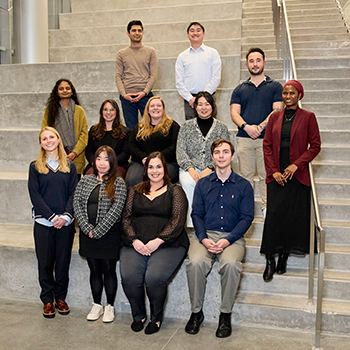 Virtua Health College is driving innovation in patient care through translational biomedical research. By awarding competitive fellowships to Rowan University doctoral students, we empower emerging scientists to transform groundbreaking discoveries into real-world clinical solutions. Translational research bridges the gap between laboratory findings and bedside applications, ensuring that scientific advancements directly improve health outcomes.
These fellowship projects unite multidisciplinary teams of Rowan University researchers and Virtua Health clinicians, fostering collaboration that accelerates the journey from concept to care. This partnership positions Virtua Health College as a leader in advancing evidence-based practices that make a measurable impact on patient lives.
2025-2026 VHC Fellowship Projects
 Antonio Abbondandolo
PhD in Biomedical Engineering
Exploring the Mechanism of Action of an Intervertebral Disc Prosthesis
This project explores how a minimally invasive injectable hydrogel, HYDRAFIL, can reduce back pain caused by degenerative disc disease (DDD). Using an ex vivo bovine model, we can analyze key markers of inflammation that promote degeneration and pain. Preliminary results have shown promise in the ability of our hydrogel to mitigate the inflammatory and extracellular matrix loss profiles of our degenerative tissue culture model. These results suggest HYDRAFIL may function as an anti-inflammatory agent, reversing the degenerative environment caused by DDD.
Impact areas: Inflammatory response, injectable therapy, intervertebral disc
Project team members
Erik Brewer, PhD - Rowan University, Biomedical Engineering
Renee Demarest, PhD - Rowan University, Cell & Molecular Biology
Tony Lowman, PhD - Rowan University, Biomedical Engineering
 Morgan Antisell
PhD in Biomedical Engineering
Modeling Metabolic Regulation to Predict Adverse Drug Reactions
This research seeks to predict and prevent adverse drug reactions by identifying specific biological regulators that drive individual variability in drug metabolism. We will characterize gene and protein expression trends related to differences in metabolic enzymes. This will allow us to estimate a patient's specific drug metabolism profile, which will help health care providers determine appropriate pharmaceutical dosages for a given individual to avoid side-effects.
Impact areas: Personalized medicine, metabolic regulation, drug safety
Project team members
Sophia Orbach, PhD - Rowan University, Biomedical Engineering
James Grinias, PhD - Rowan University, Chemistry & Biochemistry
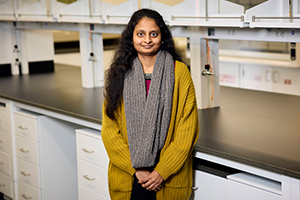 Likhitha Dandu
PhD in Cell & Molecular Biology
Resolvin D2/GPR18 Interaction in Sepsis
Sepsis causes severe inflammation dictated by pro-inflammatory mediators and then followed by immune suppression. Resolvin D2(RvD2), acting via its receptor GPR18, may restore immune balance. In THP-1 macrophages, LPS increased NF-κB but reduced GPR18. RvD2 lowered NF-κB and upregulated GPR18. In a 2-hit LPS model mimicking immunosuppression, RvD2 restored NF-κB activity. These effects were blocked by a GPR18 antagonist, suggesting RvD2 reprograms macrophages to recover immune responsiveness. These studies could lead to better therapeutic strategies for treatment of immunosuppression in sepsis.
Impact areas: Critical care, sepsis, resolvin D2
Project team members
Kingsley Yin, PhD - Rowan University, Cell & Molecular Biology
Emilio Mazza, MD, PhD - Virtua Health, Pulmonology
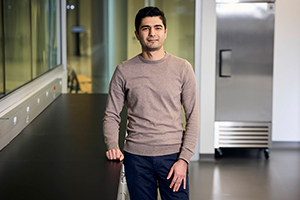 Shahab Edalatian Zakeri
PhD in Biomedical Engineering
Multi-target peptide amphiphile hydrogels for diabetic foot ulcer
Diabetic foot ulcers are complicated and often infected wounds that won't heal due to uncontrolled inflammation and have low amounts of prohealing molecules for blood vessel repair. Current treatments fail to address the complicated nature of these wounds. We are creating a multi-action gel to reduce excess inflammation and infection and to promote blood vessel repair. We use patient-derived cells to validate this gel's superior healing potential for eventual clinical use as a wound dressing.
Impact areas: Wound healing, inflammatory response, tissue regeneration
Project team members
Patrick Hwang, PhD - Rowan University, Biomedical Engineering
Thomas Sacchetta, DPM - Virtua Health, Foot and Ankle Surgery
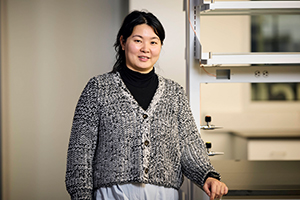 Narangerel Gantumur
PhD in Biomedical Engineering
Yarn-based Metallo-Elastomer Cardiac Patches with Anisotropy
Acute myocardial infarction (MI) induces significant morbidity and mortality, yet clinical interventions primarily restore coronary patency without addressing tissue loss. This project aims to engineer a cardiac patch utilizing aligned, multilayered nanofiber sheets seeded with cardiomyocytes and endothelial cells. A top piezoelectric layer is integrated to enhance electromechanical coupling, promoting recellularization, structural support, and electrical integration within the infarcted myocardium.
Impact areas: Smart biomaterials; cardiovascular implants; regenerative medicine
Project team members
Ying (Grace) Chen, PhD - Rowan University, Biomedical Engineering
Chun (Dan) W. Choi, MD - Virtua Health, Cardiac Surgery
Vince Beachley, PhD - Rowan University, Biomedical Engineering
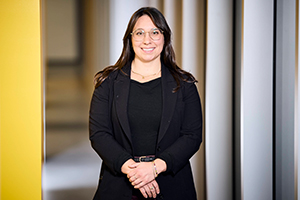 Dominique Hassinger
PhD in Biomedical Engineering
Peptide-functionalized nanoyarns for next generation sutures
Our team seeks to address the limitations of conventional sutures—particularly their lack of biofunctionalization—by developing peptide-functionalized nanoyarns designed to promote antimicrobial activity and tissue regeneration. Using an electrospinning system with a parallel track configuration unique to our group, we can align and post-draw nanofibers, offering tight control over nanoyarn features not achievable with standard nanoyarn fabrication setups.
Impact areas: Advanced surgical materials, orthopedics, regenerative medicine
Project team members
Vince Beachley, PhD - Rowan University, Biomedical Engineering
Sean McMillan, DO - Virtua Health, Orthopedic Sports Medicine
Sebastian Vega, PhD - Rowan University, Biomedical Engineering
Valerie Carabetta, PhD - Rowan University, Biomedical Science
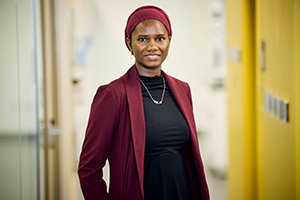 Umu Jalloh
PhD in Biomedical Engineering
Novel Hydrogels for Treating Sports-related Long Bone Fractures
Bone fractures are prevalent in high-impact sports, and the use of materials to locally deliver biologics can be used to speed up fracture healing and reduce recovery time. Towards this, this project is studying the effects of bone-producing peptides and immunosuppressants on the formation of new bone. During the fellowship award period, hydrogel formulations that maximize bone formation will be determined, and tested under conditions that mimic sports-related fractures for clinical translation.
Impact areas: Biomaterials; bone fracture repair; regenerative medicine
Project team members
Sebastian Vega, PhD - Rowan University, Biomedical Engineering
Sean McMillian, DO - Virtua Health, Orthopedic Sports Medicine
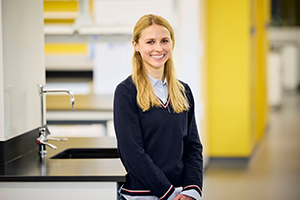 Emily Kopchick
PhD in Biomedical Engineering
Modeling Injury-Mediated Effects to CNS with 3D printed ECM
Traumatic injury to the central nervous system remodels the extracellular matrix (ECM) and disrupts the blood–spinal cord barrier (BSCB). This project will produce decellularized ECM (dECM) from bovine spinal cord (both healthy and injured), characterize differences in the matrix composition, formulate a photocrosslinkable bioink, and test endothelial barrier function in vessels patterned within the dECM hydrogels. These studies aim to identify ECM-related therapeutic targets to maintain endothelial barrier function following central nervous system injury.
Impact areas: Spinal cord injury, traumatic brain injury, biomaterials
Project team members
Peter Galie, PhD - Rowan University, Biomedical Engineering
Nimish Acharya, PhD - Rowan University, Neuroscience
 Vanessa Pizutelli
PhD in Cell & Molecular Biology
RNA as a Prospective Biomarker for Ischemia/Reperfusion Injury
This study explores how heart surgery affects RNA that is released into the blood. By studying RNA present in blood before and after surgery, we hope to find new biomarkers that show when heart tissue is stressed or damaged. Discovering these signals could help clinicians detect complications earlier and improve recovery for patients after heart surgery.
Impact areas: Molecular diagnostics, cardiovascular, oxidative stress
Project team members
Dimitri Pestov, PhD - Rowan University, Cell & Molecular Biology
Chun (Dan) W. Choi, MD - Virtua Health, Cardiac Surgery
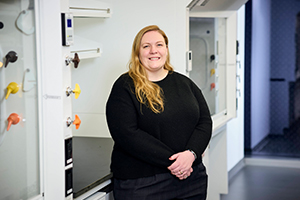 Nakoa Webber
PhD in Complex Biological Systems
Investigating effects of PINCH-1 sumoylation on protein interactions
Our goal is to investigate PINCH-1 sumoylation, a post-translational modification that has recently been identified to promote chemotherapy resistance and cancer cell survival to identify a potential therapeutic target to improve glioblastoma treatment sensitivity. Using structural biology tools, we will purify PINCH-1 protein to quantitatively analyze PINCH-1 sumoylation and its effect on protein-protein interactions to further our understanding of PINCH-1 biology.
Impact areas: Structural biology, cancer, therapeutics
Project team members
Nathaniel Nucci, PhD - Rowan University, Biological & Biomedical Sciences
Dianne Langford, PhD - Rowan University, Neuroscience
Alvaro Garcia, PhD - Rowan University, Neuroscience
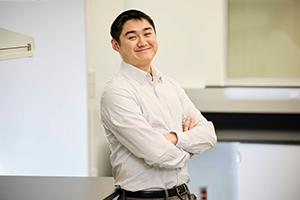 Joshua Yang
PhD in Biomedical Engineering
Development of novel ionizable lipids to treat diseases of pregnancy
Ionizable lipids will be developed to uncover structure:function relationships between lipid design, drug delivery efficiency, and tissue specificity. These lipids form lipid nanoparticles to deliver nucleic acids to tissues, such as the placenta to treat preeclampsia. Our success will elucidate how ethers, piperazines, tail length, and saturation of the lipids affect delivery. Ultimately, this will create a therapeutic for preeclampsia and guide the development of next-generation nanoparticles.
Impact areas: Drug delivery, gene therapy, maternal-fetal medicine
Project team members
Rachel Riley, PhD - Rowan University, Biomedical Engineering
Kelli Daniels, MD - Virtua Health, Obstetrics and Gynecology
Lark Perez, PhD - Rowan University, Chemistry and Biochemistry
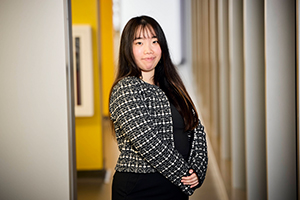 Hoi Yan Yu
PhD in Biomedical Engineering
Personalized ML Model for Liver Toxicity in Breast Cancer Patients
Breast cancer treatments can sometimes harm the liver, forcing patients to pause or stop therapy, which may reduce the effectiveness of their care. This project uses large, diverse national databases and advanced machine learning (ML) to predict which patients are most at risk for liver toxicity before it occurs. By integrating clinical records, genetic information, and detailed drug exposure data, the model aims to identify early warning patterns. The ultimate goal is to help doctors personalize treatment plans, minimize side effects, and improve both safety and quality of life for breast cancer patients.
Impact areas: Precision oncology, hepatotoxicity, predictive modeling
Project team members
Sophia Orbach, PhD - Rowan University, Biomedical Engineering
Charalampos (Babis) Papachristou, PhD - Rowan University, Department of Mathematics